

From collapsing crop yields to heat-stressed animals, new warnings from Food and Agriculture Organization and World Meteorological Organization signal a growing food security crisis that could reshape how the world grows, produces, and consumes food
The crisis is no longer coming—it has already begun
Across continents, something fundamental is breaking.
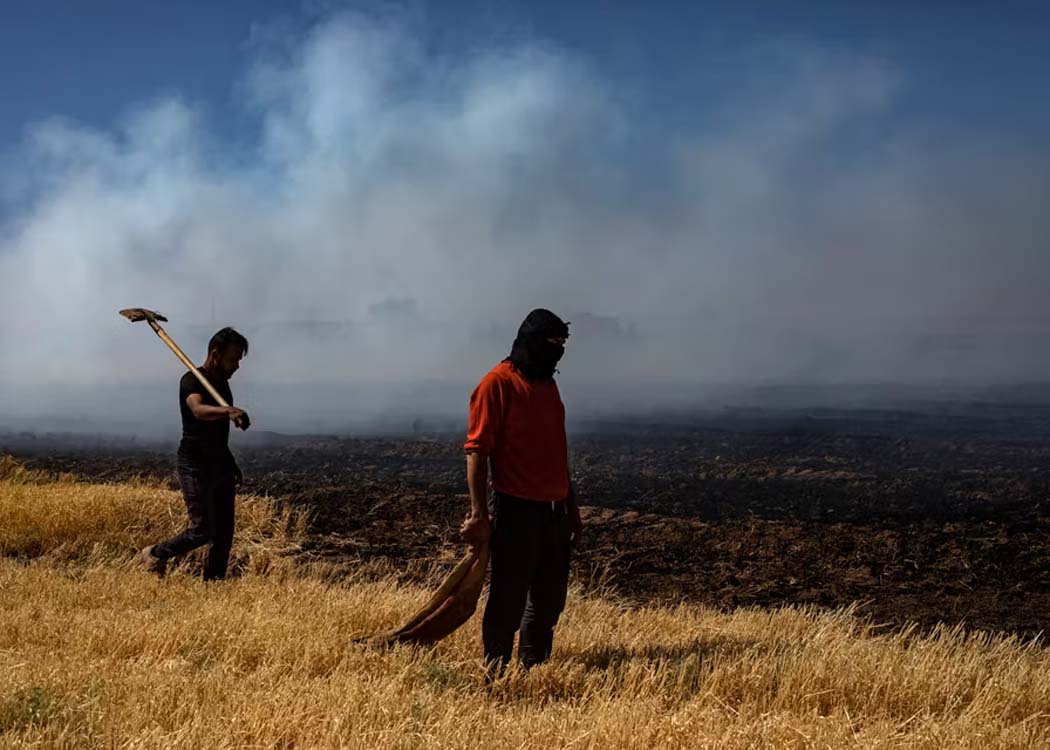
Fields that once produced stable harvests are now yielding less. Livestock that sustained economies are showing signs of stress. And food systems—long considered resilient—are beginning to crack under a new kind of pressure: heat.
According to recent global assessments from the Food and Agriculture Organization and the World Meteorological Organization, rising temperatures are no longer a distant climate concern—they are an immediate and escalating threat to agriculture, livestock, and global food security.
When heat crosses a threshold, production begins to fail
For crops, the tipping point is sharper than many realize.
Once temperatures rise beyond approximately 30°C, yields for key staples such as wheat, maize, and rice begin to decline significantly. Heat stress disrupts photosynthesis, shortens growth cycles, and reduces grain formation—meaning less food from the same land.
For livestock, the threshold is even lower.
At around 25°C, animals begin to experience physiological stress. Feed intake drops, milk production declines, fertility rates fall, and disease vulnerability increases. Poultry, in particular, is highly sensitive to heat, with even short exposure leading to reduced weight gain and increased mortality.
What emerges is a systemic breakdown—where both plant and animal production are simultaneously compromised.
A future where half of livestock could be at risk
The projections are stark.
By the end of the century, nearly 50 percent of the world’s livestock population could be exposed to extreme heat conditions that directly impact productivity and survival.
This is not just an agricultural issue—it is a food security emergency.
Because livestock is not only a source of protein. It supports livelihoods, rural economies, and entire supply chains. When livestock suffers, the effects ripple outward—into food prices, availability, and ultimately, human health.
Why this matters for countries like Pakistan
For countries already operating in high-temperature zones, the risks are amplified.
In regions where summer temperatures frequently exceed safe thresholds, agriculture and livestock sectors are entering a zone of constant stress. Water scarcity, rising feed costs, and declining productivity are no longer isolated challenges—they are interconnected pressures shaping the future of food systems.
This has direct implications for:
- poultry production and affordability
- dairy and meat supply stability
- rural livelihoods dependent on farming
- nutritional security for growing populations
The warning is clear: without adaptation, the gap between food demand and supply will widen.
The hidden cost: from farms to food prices
As production declines, the impact does not stay confined to farms.
Lower yields and reduced livestock productivity translate into:
- higher food prices
- supply chain disruptions
- increased import dependency
- reduced access to affordable nutrition
What begins as a climate issue quickly becomes an economic and public health challenge.
Can the system adapt fast enough?
Experts are now calling for urgent, large-scale adaptation strategies.
These include heat-resilient crop varieties, improved livestock housing and cooling systems, better water management, and data-driven farming practices that can respond dynamically to climate conditions.
But adaptation requires investment, planning, and policy alignment—areas where many developing economies are still catching up.
The bigger question the world must face
This is no longer about isolated weather events.
It is about whether the global food system—built over decades for stability—can survive in an era of continuous climate stress.
Because if heat continues to rise at current rates, the challenge will not just be producing more food.
It will be producing any food at all under conditions that are becoming increasingly hostile to life itself.
Final word
The warning signs are already visible.
Heat is not just affecting crops.
It is not just stressing animals.
It is reshaping the very foundation of how food is produced. And if action does not match urgency, the question may soon shift from what we eat to whether enough food can be produced at all.