

Five-day international gathering to bring scientists, industry leaders, and policymakers together for high-impact discussions on research, innovation, and the future of poultry production
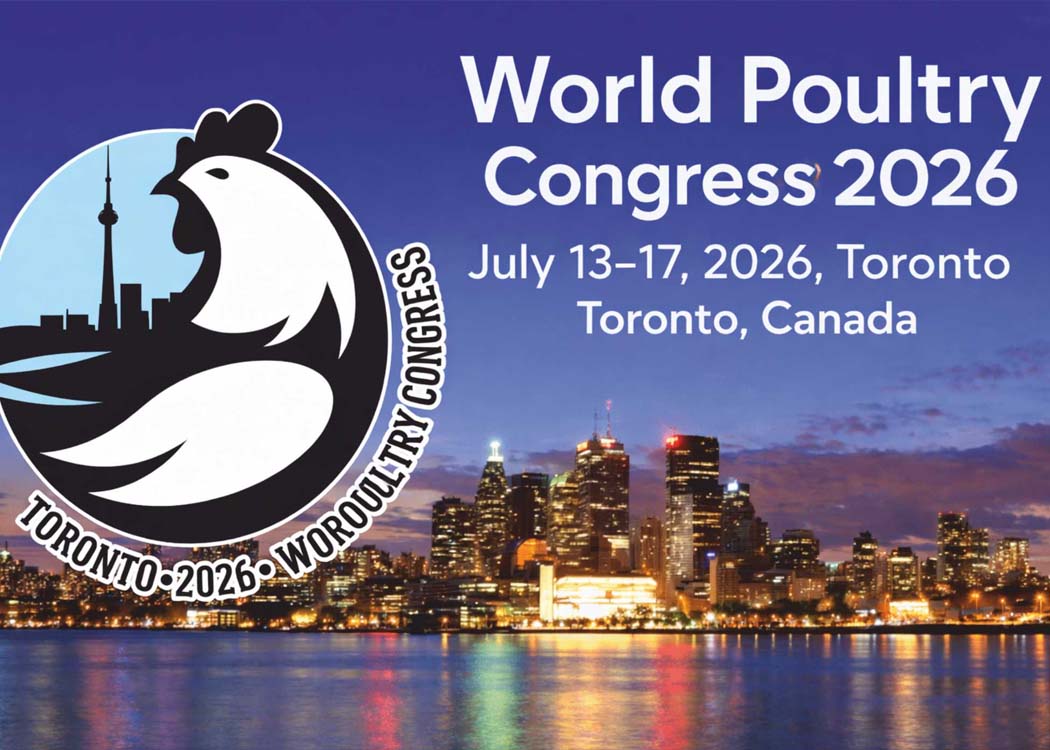
TORONTO: The global poultry industry is preparing for one of its most influential scientific and industry gatherings as the World’s Poultry Congress (WPC) 2026 is scheduled to take place from July 13 to 17 at the Metro Toronto Convention Centre in Toronto, Ontario.
Held once every four years, the World’s Poultry Congress is regarded as a premier international platform that brings together poultry scientists, industry leaders, academics, policymakers, and students from across the world. The 2026 edition is expected to serve as a critical forum for advancing research, fostering collaboration, and addressing emerging challenges in poultry production and animal health.
Over five days, participants will engage in a wide-ranging program of scientific sessions, technical discussions, and networking opportunities designed to facilitate knowledge exchange and innovation. The congress will cover key areas including poultry nutrition, genetics, disease control, sustainability, production systems, and evolving global market dynamics.
Organizers say the event aims not only to showcase cutting-edge research but also to strengthen linkages between academia and industry, enabling practical solutions to real-world challenges facing the poultry sector. With global demand for poultry products continuing to rise, the congress is expected to highlight strategies for improving efficiency, biosecurity, and sustainable production practices.
Toronto has been selected as the host city for its strong global connectivity and multicultural environment. As the fourth-largest city in North America and Canada’s most visited destination, Toronto offers extensive accessibility through two international airports serving more than 180 destinations across 55 countries, with over 1,200 daily flights. Its proximity—within 90 minutes for more than 100 million Americans—further enhances its appeal as a global meeting point.
Beyond logistics, the city provides a dynamic cultural and academic backdrop, featuring over 10,000 restaurants, more than 125 museums and galleries, and a population representing over 200 languages and dialects. More than half of Toronto’s residents are born outside Canada, reflecting a diverse and globally connected urban environment that aligns with the international nature of the congress.
Industry observers view WPC 2026 as a timely event, coming at a moment when the poultry sector is navigating complex challenges including disease outbreaks, climate pressures, feed cost volatility, and the need for sustainable protein production. The congress is expected to play a key role in shaping future directions through evidence-based dialogue and cross-border collaboration. As preparations continue, WPC 2026 is being positioned not just as a scientific conference, but as a strategic global platform where innovation, policy, and industry converge to define the future of poultry science and production.