

Commerce Ministry postpones mango export season after stakeholder concerns, raising fresh questions about crop readiness and supply timing
KARACHI: Pakistan’s much-awaited mango export season has been pushed back unexpectedly after the Ministry of Commerce officially delayed the start of exports for the 2026 crop season until June 1.
In a fresh notification, the ministry announced that mango exports will now begin from June 1, 2026, while all other conditions under the country’s existing export policy framework will remain unchanged.
The sudden delay comes after requests from industry stakeholders, signaling possible concerns over crop maturity, fruit quality, harvesting timelines, or market preparedness during the early phase of the season.
The move has sparked discussion across Pakistan’s agriculture and fruit export sectors because mango exports traditionally begin in the final week of May. Last year, exports officially opened on May 25.
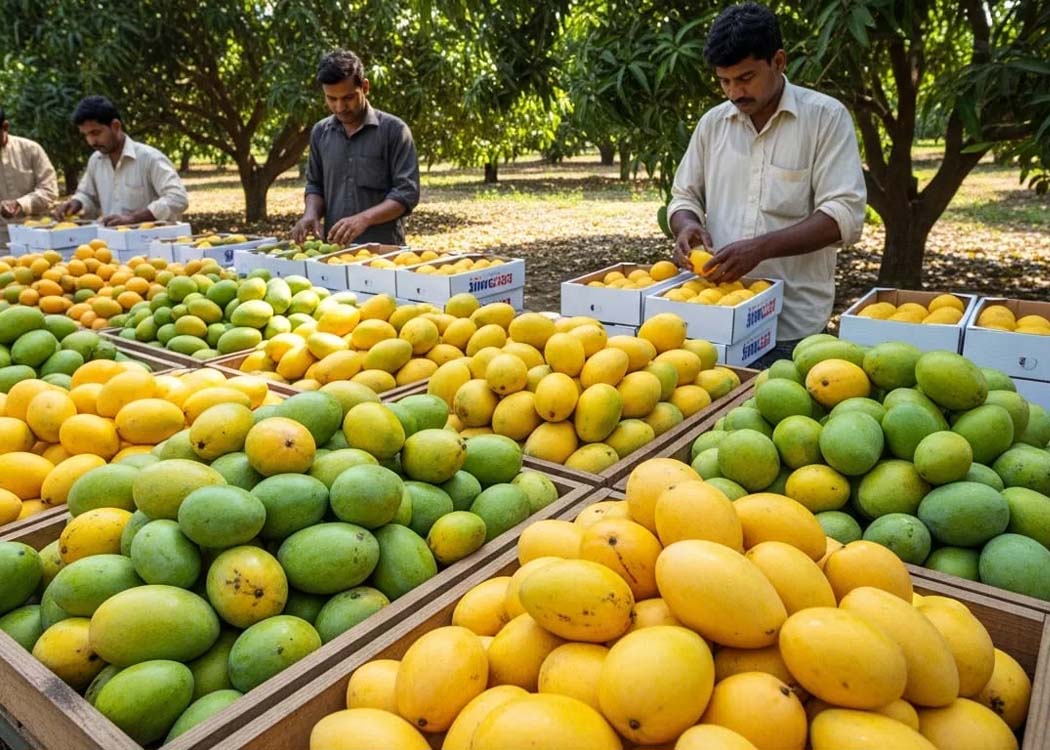
Pakistan remains one of the world’s major mango-exporting countries, supplying premium varieties to international markets across the Middle East, Europe, Central Asia, and other global destinations. Exporters say demand remains particularly strong for iconic Pakistani varieties including Sindhri, Chaunsa, Anwar Ratol, and Langra.
The delay could help exporters ensure better fruit quality and improved shelf life for overseas shipments, especially as climate fluctuations and changing weather patterns continue to affect harvest cycles in several mango-growing regions.
Industry observers believe the revised timeline may ultimately benefit Pakistan’s export reputation by reducing the risk of immature fruit reaching international markets during the opening weeks of the season.
Pakistan’s mango industry contributes significantly to the country’s agricultural exports every year, with thousands of growers, traders, transporters, and exporters linked directly to the seasonal supply chain. With the export window now officially shifted, exporters and international buyers are expected to closely monitor crop availability and pricing trends in the coming weeks.