

Agriculture stakeholders urge government to define a clear policy path as rising costs, shrinking profits and worsening water shortages deepen concerns across the farming sector
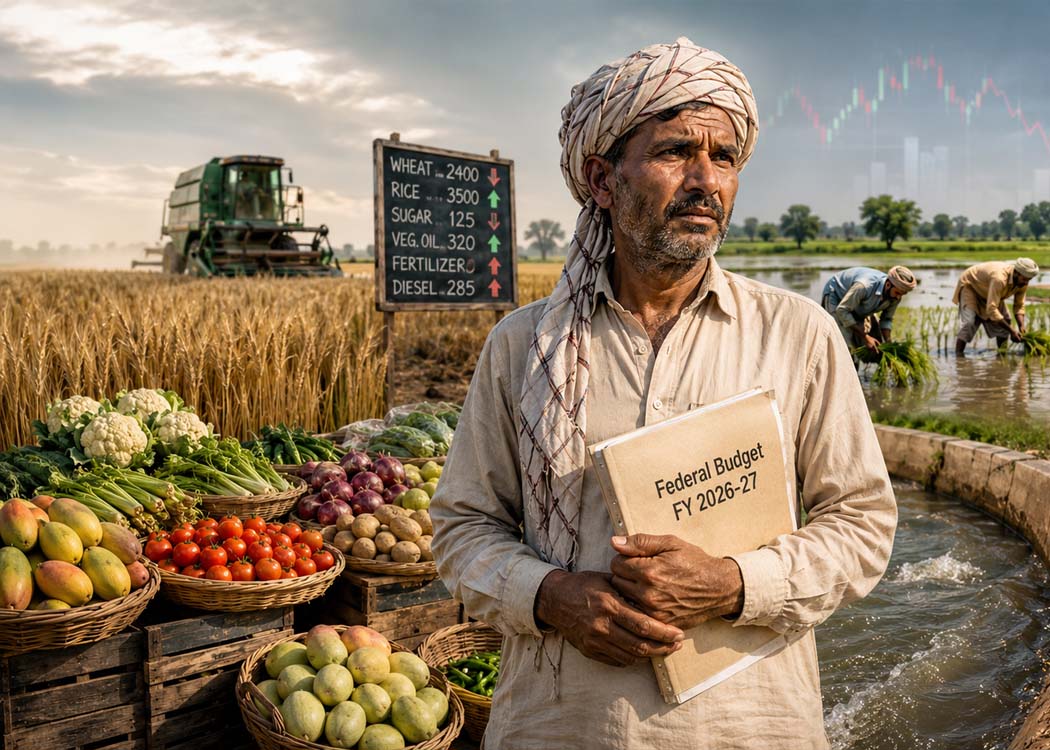
ISLAMABAD: As Pakistan prepares to unveil the federal budget for 2026-27, farmers, agricultural experts and industry stakeholders are calling for decisive policy action, warning that prolonged uncertainty is undermining one of the country’s most important economic sectors.
From volatile crop prices and rising production costs to worsening water shortages and fragmented landholdings, agriculture faces a combination of challenges that many growers say is making farming increasingly difficult to sustain.
Agriculture contributes significantly to Pakistan’s economy, supports rural livelihoods, and plays a central role in food security. Yet many stakeholders believe inconsistent policy decisions in recent years have created an unpredictable business environment for growers.
Demand for a long-term agricultural roadmap
Experts argue that one of the sector’s biggest problems is the absence of a consistent and clearly communicated policy framework.
Over the past several years, governments have alternated between market liberalization and regulatory intervention, often creating uncertainty for farmers, traders, and investors. Agricultural input costs, including fertilizers, seeds, pesticides, fuel and machinery, have steadily increased, while farmers frequently complain that crop prices do not adequately reflect rising production expenses.
Many in the sector are now urging policymakers to use the upcoming budget to establish a long-term direction for agriculture rather than relying on short-term measures and periodic market interventions.
Agricultural economists note that stable policy environments encourage investment, improve productivity and help farmers make informed planting and marketing decisions.
Wheat policy remains at the center of debate
The controversy surrounding wheat continues to illustrate the challenges facing agricultural policymaking in Pakistan.
Following the government’s withdrawal from large-scale wheat procurement operations, farmers were increasingly exposed to market fluctuations. Subsequent efforts to stabilize the market through administrative interventions and support mechanisms created further uncertainty, leaving many growers dissatisfied with both pricing outcomes and policy consistency.
Farmer organizations argue that frequent shifts in procurement and pricing strategies have weakened confidence and reduced profitability for wheat producers, many of whom depend on the crop as a primary source of income.
Small farmers face mounting pressures
Structural challenges continue to place additional burdens on small-scale farmers, who represent the majority of agricultural producers in Pakistan.
Agricultural experts point out that continued subdivision of land through inheritance has reduced average farm sizes, limiting productivity and making mechanization less practical and affordable.
To address these challenges, specialists have proposed greater support for cluster farming models, coordinated crop zoning, and stronger partnerships between growers and suppliers of certified seeds, fertilizers and agricultural services.
Such measures could improve productivity, reduce costs and enhance market access for small and medium-sized farmers.
Calls for machinery access and affordability
Mechanization remains out of reach for many growers due to high equipment costs.
Agriculture specialists suggest that the government consider establishing machinery rental centers through public-private partnerships, allowing small farmers to access tractors, harvesters and other equipment without the substantial financial burden of ownership.
Supporters of the proposal believe it could improve efficiency, reduce labor shortages and increase productivity across rural areas.
Farmers seek fair pricing mechanisms
Grower organizations say profitability has become the most immediate concern facing the sector.
They are urging policymakers to introduce transparent pricing mechanisms that better reflect actual production costs. Farmer representatives argue that rising expenditures on agricultural inputs have significantly reduced profit margins, making farming economically unsustainable for many households.
Several stakeholders have proposed independent crop pricing models that would factor in production costs and reasonable profit margins before harvest seasons begin.
According to farming groups, predictable pricing policies could encourage investment, stabilize production and help safeguard rural incomes.
Water shortages emerge as a critical threat
Beyond economic pressures, water scarcity is increasingly viewed as one of the most serious long-term threats to Pakistan’s agricultural future.
Recent years have witnessed recurring water shortages across irrigation systems, affecting crop planning and agricultural productivity in several regions.
Agriculture experts warn that existing irrigation infrastructure is struggling to meet growing demand, while investments in water storage, canal modernization and irrigation efficiency remain below requirements.
Farmers also express concern over declining groundwater reserves and increasing dependence on groundwater extraction in many agricultural areas.
Climate change intensifies challenges
Environmental experts caution that climate change is adding another layer of complexity to an already stressed agricultural system.
Rising temperatures, irregular rainfall patterns, extreme weather events and shifting water availability are creating new risks for crop production and food security.
Stakeholders argue that climate resilience must become a central component of future agricultural planning, with greater emphasis on water conservation, drought-resistant crops and sustainable farming practices.
Budget expectations grow
With Budget 2026-27 approaching, agricultural stakeholders are hoping policymakers will move beyond short-term fixes and present a comprehensive strategy that addresses pricing, productivity, mechanization, water management and climate resilience.
Many believe the future competitiveness of Pakistan’s agriculture sector will depend on whether the government can provide policy consistency, encourage investment and create conditions that allow farmers to remain economically viable. As budget discussions intensify, the farming community will be closely watching for signals that agriculture is being treated not only as a sector requiring support, but as a strategic pillar of Pakistan’s economic and food security future.