

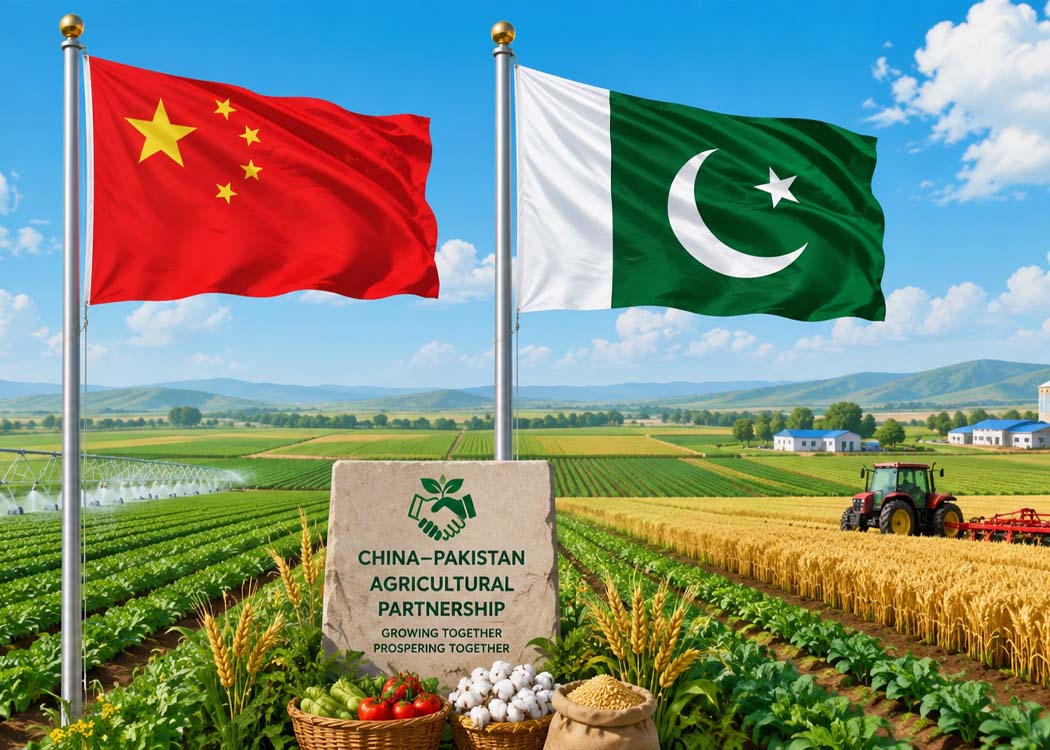
Pakistan and China are expanding cooperation in agricultural modernization as the government invites Chinese agri-tech giant FAMSUN to invest in modern grain storage, feed processing and technology transfer—developments that could improve food security, reduce post-harvest losses and support Pakistan’s poultry and livestock sectors.
ISLAMABAD: Pakistan has taken another step towards modernizing its agriculture sector by strengthening collaboration with China’s FAMSUN Group, one of the world’s leading providers of feed, grain processing and agricultural engineering technologies.
The latest engagement signals growing Pakistan-China cooperation in agricultural innovation, with a particular focus on modern grain storage, feed processing, technology transfer and investment aimed at improving food security and supporting the country’s livestock and poultry industries.
The discussions took place during a high-level meeting chaired by Federal Minister for National Food Security and Research Rana Tanveer Hussain with a delegation of FAMSUN Group led by its Chief Executive Officer, Jack Chen.
Focus on agricultural modernization
During the meeting, both sides explored opportunities to deepen cooperation in agricultural modernization through advanced technologies, research collaboration and investment in Pakistan’s agri-food sector.
Welcoming the Chinese delegation, the federal minister said Pakistan highly values its longstanding strategic partnership with China and appreciates the confidence shown by leading Chinese companies in the country’s agricultural potential.
He noted that Pakistan-China cooperation is entering a new phase that places greater emphasis on agricultural development, innovation, industrial collaboration, value addition and technology transfer.
Why modern grain storage matters
One of the key priorities discussed was the development of modern grain storage infrastructure.
Pakistan loses a significant quantity of wheat, maize and other agricultural commodities every year due to inadequate storage, inefficient handling and post-harvest losses. Experts say modern storage systems can help preserve grain quality, improve food security, reduce waste and strengthen the country’s agricultural value chain.
Improved grain management also benefits livestock and poultry production by ensuring a more reliable supply of quality feed ingredients.
Potential benefits for Pakistan’s poultry sector
Although the discussions covered the wider agri-food sector, the proposed cooperation is particularly relevant for Pakistan’s poultry and livestock industries.
FAMSUN is internationally recognized for providing integrated solutions in feed milling, grain storage, feed processing equipment and smart agricultural technologies used across the global livestock industry.
Industry experts believe greater access to advanced feed processing technologies could improve production efficiency, reduce operating costs and enhance feed quality—factors that directly influence poultry productivity and food security.
With Pakistan’s poultry industry supplying a major share of the country’s animal protein, investments in modern feed infrastructure could contribute to stronger agricultural resilience over the long term.
Technology transfer and investment
The minister invited FAMSUN to expand its footprint in Pakistan by increasing investment, introducing advanced agricultural technologies and strengthening cooperation with local institutions.
Both sides discussed opportunities for technology transfer, capacity building and collaboration that could help modernize Pakistan’s agricultural sector while supporting sustainable economic growth.
Technology Display Park planned at PARC
In another significant development, the Pakistan Agricultural Research Council (PARC) and FAMSUN recently signed a Letter of Intent to establish a FAMSUN Technology Display Park at PARC.
The initiative aims to promote agricultural innovation, research collaboration, technology transfer and capacity building by demonstrating modern agricultural and feed-processing technologies suitable for Pakistan’s farming sector. Officials described the agreement as an important milestone for agricultural modernization and national food security.
Supporting food security and sustainable agriculture
The latest developments reflect Pakistan’s broader strategy of attracting international investment and advanced technologies to improve agricultural productivity, strengthen food security and increase value addition across the agri-food sector.
As climate change, population growth and rising food demand place increasing pressure on agricultural systems, experts believe partnerships focused on innovation, efficient resource use and modern infrastructure will play an increasingly important role in ensuring sustainable food production. For Pakistan’s poultry, livestock and grain sectors, closer cooperation with global agricultural technology leaders could help accelerate modernization while improving productivity, reducing losses and strengthening the country’s long-term food security.