

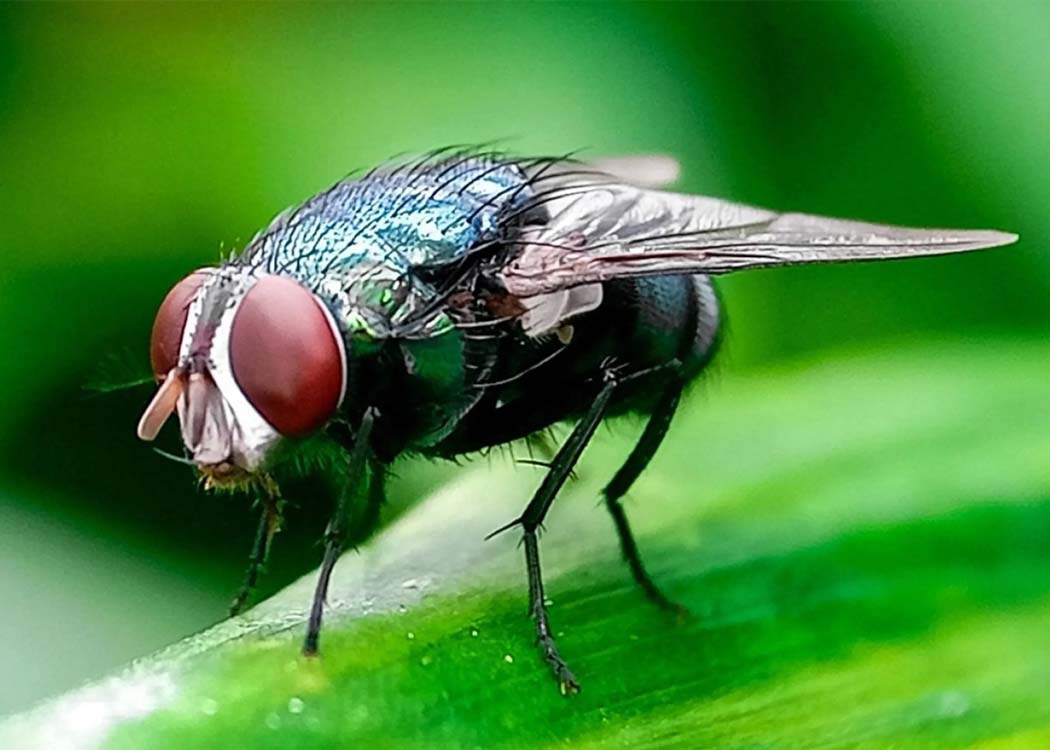
The US Department of Agriculture will establish a new sterile-fly dispersal facility in Arizona to combat the New World screwworm, a flesh-eating parasite that threatens livestock, wildlife and even humans, as officials intensify efforts to contain its spread.
WASHINGTON: The United States Department of Agriculture (USDA) has announced a new $25 million initiative to strengthen its fight against the New World screwworm, a flesh-eating parasite capable of killing livestock and causing significant economic losses, as the pest continues to pose a growing threat to North America’s cattle industry.
Under the plan, the USDA will establish a sterile-fly dispersal facility in Douglas, Arizona, near the US-Mexico border. The facility will release millions of sterilized male screwworm flies into affected areas, preventing the insects from reproducing and helping suppress wild populations through a proven biological control strategy known as the Sterile Insect Technique (SIT).
The announcement comes as the USDA prepares to gradually reopen cattle imports from Mexico following more than a year of restrictions imposed to prevent the parasite from entering the United States. While the import suspension contributed to record-high US beef prices, federal officials say strengthened surveillance and enhanced control measures now allow for a phased reopening without compromising livestock health.
What is the New World screwworm?
Unlike ordinary maggots that feed on dead tissue, New World screwworm larvae invade living flesh. Adult female flies lay eggs in open wounds on warm-blooded animals, and after hatching, the larvae burrow into healthy tissue, causing severe wounds, infection and, if left untreated, death.
Although cattle are among the most commonly affected animals, the parasite can also infest sheep, goats, horses, wildlife, pets and, in rare cases, humans. The pest was eradicated from the United States decades ago through an extensive sterile-fly programme, but its recent northward spread through Mexico has renewed concerns among animal health authorities.
Sterile flies remain the most effective defence
USDA officials describe sterile-fly releases as the most effective tool available for controlling screwworm populations.
Instead of relying on pesticides, millions of laboratory-reared sterile male flies are released into the environment, where they mate with wild females. Because these matings produce no offspring, the wild population gradually declines over time.
In addition to the Arizona dispersal centre, the USDA is also supporting the construction of a much larger sterile-fly production facility in Texas to expand its long-term capacity to combat future outbreaks.
Balancing biosecurity and livestock trade
The new initiative reflects the challenge facing US authorities as they attempt to protect livestock while restoring cross-border cattle trade.
The USDA has confirmed that cattle imports from Mexico will resume in phases beginning with the Douglas, Arizona, port of entry, provided Mexico continues implementing agreed disease-control measures. Every imported animal will undergo inspection for signs of screwworm infestation before entering the United States.
Some cattle producers have welcomed the reopening as a way to ease supply shortages and stabilise beef prices, while others remain concerned that increased livestock movement could raise the risk of further infestations if surveillance weakens.
Global relevance for livestock-producing countries
The renewed investment highlights the importance of strong veterinary surveillance, border biosecurity and rapid disease response systems for countries with large livestock sectors. Experts say parasites such as the New World screwworm can spread across borders through animal movement and require coordinated regional efforts to prevent outbreaks that threaten food security, livestock productivity and rural livelihoods. The USDA’s latest investment underscores how early detection and preventive measures remain critical components of animal health protection.