

Ambassador Dr Mohammad Nafees Zakaria calls for research with direct benefits for people’s lives as the science alliance reviews its 2026 progress, research funding programmes and future priorities, highlighting collaboration that has supported more than 600 researchers and scientists from COMSATS member states.
ISLAMABAD: Agriculture and food security should become central priorities in the future scientific development strategy of the Alliance of National and International Science Organizations for the Belt and Road Regions (ANSO), Executive Director of the Commission on Science and Technology for Sustainable Development in the South (COMSATS), Ambassador Dr Mohammad Nafees Zakaria, has urged.
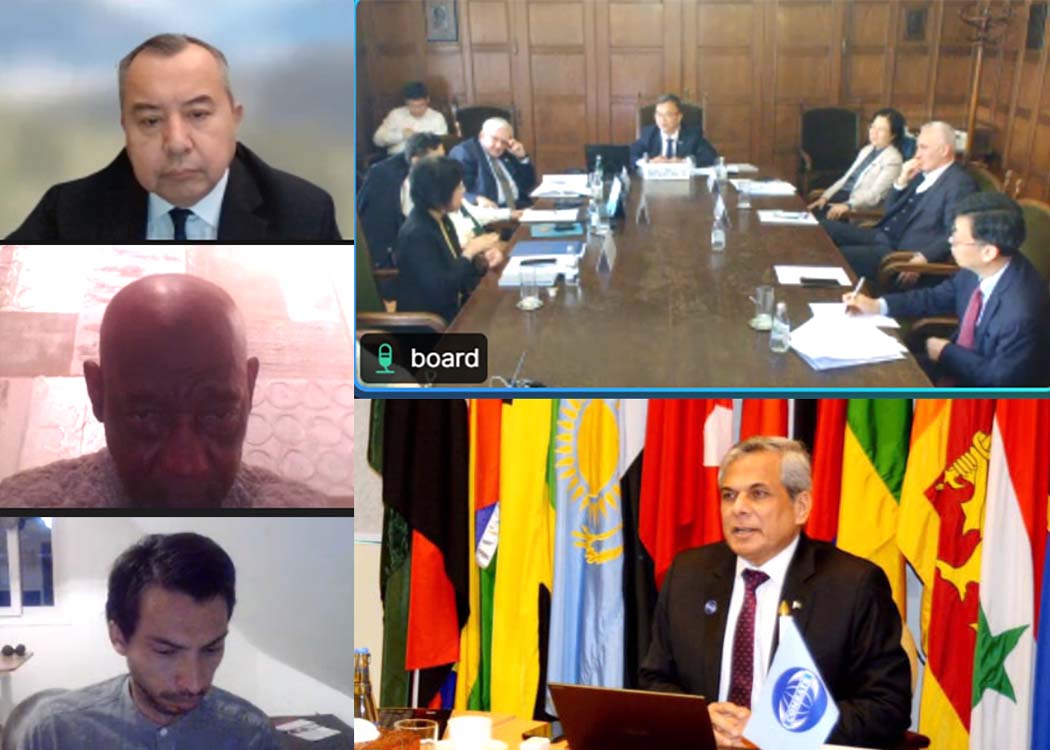
Speaking at the 13th Meeting of the ANSO Governing Board, Ambassador Zakaria called for greater emphasis on scientific research and collaborative initiatives that address people’s practical needs and deliver tangible benefits for their lives. His remarks placed agriculture and food security among the areas requiring stronger attention as international science organisations shape their future priorities.
The meeting was chaired by Prof. He Hongping, President of ANSO and Vice President of the Chinese Academy of Sciences (CAS). According to a COMSATS press release issued on Wednesday, the governing board reviewed ANSO’s 2026 progress report, membership dues, proposed amendments to the alliance’s statutes, new membership applications and priorities for future development.
Ambassador Zakaria has served as a member of the ANSO Governing Board since 2023 and contributed to discussions on the alliance’s strategic direction, including the role of emerging technologies in advancing scientific cooperation.
Agriculture and food security are closely connected to livelihoods, nutrition and the resilience of food systems. By advocating their inclusion among ANSO’s strategic priorities, Ambassador Zakaria emphasised the importance of directing scientific cooperation towards challenges with direct consequences for communities, particularly across developing countries.
The discussions also covered ANSO’s major research, education and scientific exchange initiatives, including the CAS-ANSO Scholarship, Fellowship and Conference Programme, Collaborative Research Programme, Co-funding Research Programme and ANSO Lecture Series. These programmes provide a framework for supporting researchers, facilitating scientific exchange and strengthening international research partnerships.
The governing board’s deliberations came as ANSO acknowledged COMSATS’ contributions to collaborative scientific activities, including two conferences organised in Islamabad in 2026.
The first was the ANSO-COMSATS Conference on “Artificial Intelligence Enabled Solutions for Sustainable Water Governance, Security and Safety,” held in September. The conference addressed the application of emerging technologies to water governance and security, an area of growing importance for sustainable development.
The second was the ANSO-COMSATS-TWAS Conference on “A Sustainable Future for All Living Species on Planet Earth,” held in Islamabad in October. The meeting brought sustainability and the future of living species into the broader programme of international scientific cooperation.
ANSO also highlighted its participation in COMSATS’ meetings and activities, including the 26th COMSATS Coordinating Council Meeting held in Indonesia, reflecting the continuing engagement between the two organisations.
Highlighting the depth of this partnership, Ambassador Zakaria cited the 11 terms of the ANSO-BIDI School, which have benefited more than 600 researchers and scientists from COMSATS member states. The initiative illustrates the role of sustained institutional cooperation in expanding research opportunities and strengthening scientific capacity across participating countries.
Beyond its existing programmes, COMSATS reaffirmed its readiness to support ANSO’s future work through its institutional experience, network of Centres of Excellence, technical expertise and research capabilities. Ambassador Zakaria emphasised the potential for the two organisations to deepen cooperation in science, technology and innovation while promoting inclusive development across the developing world.
The meeting provided an opportunity to review ANSO’s ongoing programmes and consider the priorities that will shape its next phase of development. COMSATS’ call for greater attention to agriculture and food security underscored a broader question for international scientific partnerships: how can research collaboration and emerging technologies be directed towards challenges that matter most to people’s daily lives?
For developing countries facing interconnected pressures involving food systems, natural resources and sustainable development, stronger scientific cooperation can help build research capacity and create opportunities for solutions grounded in local needs. The extent to which these priorities translate into future programmes and measurable outcomes will be important in assessing the practical impact of the alliance’s evolving strategy.