

Muhammad Bilal1* Dr. Muhammad Auon1, Dr. Umer Farooq1, Dr. Riaz Mustafa2, Dr. Umar Farooq2, Dr. Muhammad Farooq Khalid2 and Dr. Abdul Tawab2
1*Department Animal Nutrition, University of Agriculture Faisalabad Constituent College Toba Tek, Pakistan
1Department Anatomy, University of Agriculture Faisalabad Constituent College Toba Tek, Pakistan
1Department Animal Nutrition, University of Agriculture Faisalabad Constituent College Toba Tek, Pakistan
2Department Pathology, University of Agriculture Faisalabad Constituent College Toba Tek, Pakistan
2Department Poultry Science, University of Agriculture Faisalabad Constituent College Toba Tek, Pakistan
2Department Animal Nutrition, University of Agriculture Faisalabad Constituent College Toba Tek, Pakistans
2Department Microbiology, University of Agriculture Faisalabad Constituent College Toba Tek, Pakistan
Introduction:
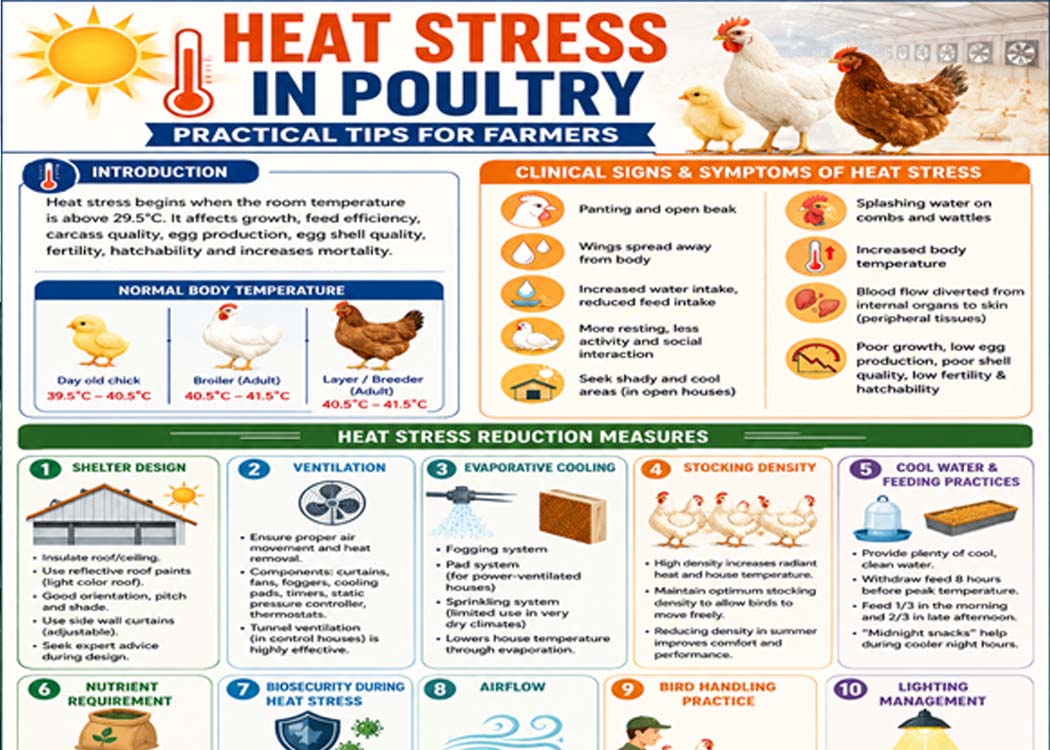
Heat stress is a global problem in poultry production. A day old chick’s average body temperature is 39.5°C to 40.5°C. While the normal internal temperature for the adult broiler, layer and breeder bird is 40.5°C to 41.5C°. Heat stress begins when the room temperature is above 29.5C° due to which physiological changes starts within bird’s body to disperse excess heat. If this condition continues it will affect optimal growth rate, hatchability, egg size, eggshell quality and egg production. High ambient temperature can be destructive to commercial broilers; engaged with high humidity they can have even more harmful effect. Heat stress interrupt with the broiler comfort and suppresses productive efficiency, growth rate, feed efficiency, carcass quality, increased time to reach market value and high mortality. In laying hens, Heat stress lead to decline in egg production and egg shell quality, as well as, shelf life of egg is also lowered. In breeder high room temperature linked with high humidity decreases fertility leading to low hatchability. During this time the increase in body temperature has an adverse effect on gamete formation and fertilization process. Hens must make major thermo-regulatory adaptations to prevent mortality from heat exhaustion due to which maximum genetic potential of layer is often not achieved.
Clinical signs and symptoms of heat stress
Poultry subject to high environment temperatures lead to many behavioral and physiological changes which allow them to balance body heat again with their surroundings. As room temperature increases above comfort zone, birds reduce their feeding time while spending more time in drinking, panting with their wings elevated and more time resting. Usually, their wings are spread away from body to promote cooling by reducing body insulation and they splash water on combs and wattles in order to increase evaporative cooling from these surfaces. Heat stressed birds also spend relatively less time engaging in social behavior and in changing position. In open houses, birds will look for a shady and cool area. Within the bird, blood flow is diverted from specific internal organs such as liver, kidneys and intestine to dilated blood vessels of peripheral tissues (skin) in order to help the body release heat.
Heat stress reduction measures
Shelter Design
The design of the building and its ventilating system, the sitting of new buildings and construction materials, will have an effect. Roof color, reflectivity, pitch and orientation, and whether the building is in shade or not, are the factors which will have a small bearing on solar heat gain. Expert advice should be sought at design stage. The house and ventilation system must complement each other to achieve maximum benefit. All naturally ventilated houses must be equipped with some type of adjustable side wall curtains to control flow of air into the house. To minimize heat stress related problems during hot weather, it is always beneficial to insulate poultry house roof or ceilings. The methods used for insulation are; dropped ceiling, rigid board insulation, spray polyurethane insulation, reflective insulation. Similarly, reflective roof paints have been shown to reduce roof temperature thus reducing heat gain.
Ventilation
During the summer when the temperature and humidity is high, proper poultry house ventilation is vital to ensure the necessary removal of heat and continued productivity of the flock. The ventilation system has several components including curtains, fans, fogging nozzles, evaporative cooling pad, timers, static pressure controller and thermostats. Most ventilation systems can provide an adequate indoor environment when properly managed. In control houses, a new arrangement for ventilating poultry houses in the summer is Tunnel ventilation. It involves moving air along the building axis from inlets to exhaust fans, providing high airflow velocities. This system works best when there is no pressure difference between inlet and fans.
Evaporative cooling
It is an essential component of a hot weather ventilation system. There are two cooling systems used in poultry houses: fogging system and pad system. While the pad system can only be installed in a power-ventilated house, the fogger system can be installed in power or naturally ventilated housing to lower the temperature of the house. A third system, sprinkling, has limited usage except in very dry climates.
Stocking density
Heat loss often depends upon the difference of temperature in house and bird’s body. If stocking density is high, the radiant heat between birds increases thus increasing house temperature. Birds tend to absorb each other’s radiant heat load which makes heat management more difficult. That’s why it’s sound practice to reduce bird density in summer so that birds can move freely.
Cool water and feeding practices
During heat stress, bird tries to maintain its body temperature by increased respiration which may considerably increase water requirement. Feeding at the right time of day is very important to help birds cope with heat stress. A good strategy to take an unnecessary heat loss off the birds is to withdraw feed 8 hours prior to the anticipated time of peak temperature. One third of the daily feed ration should be given in the morning and two third in late afternoon. So, called “midnight snacks” are a good tool to give birds extra feeding time in cooler parts of night.
Nutrient requirement
In summer, a very direct way to ensure optimum nutrient intake despite decreases in feed consumption is to increase the nutrient density of the ration. Feed should be made denser with nutrients, vitamins and minerals to compensate for reducing feed intake. Thus, as the hot season progresses it may be necessary to fine tune feed formula again in mid-summer.
Biosecurity during heat stress
Heat stress weakens a bird’s immunity, making it easier for diseases outbreak. Therefore keep the house clean, control pests, and avoid unnecessary movement of labor and equipment during hot periods especially.
Airflow
Increasing the amount of air over a bird is one of the most effective methods that producers can use to increase heat removal from birds. High air speed is essential in heat stress relief especially in systems with lower stocking rates.
Bird handling practice
Avoid catching, moving, or vaccinating birds during the hottest hours of the day. Handle birds gently and quickly when it’s cooler, usually early morning or late evening, to reduce stress.
Lighting management
Dim lighting reduces bird activity and heat production inside the house. Use this during hot hours to keep birds calmer and lower the risk of heat stress.
Conclusion:
Heat stress from a hotter climate is a major challenge for poultry farming, affecting growth, egg production, and bird health. While new solutions like heat-acclimated chicks and heat-tolerant breeds are being studied, good management still matters most right now. Keeping houses well ventilated, cool, and clean helps birds stay calm, grow better, and keep healthy.