

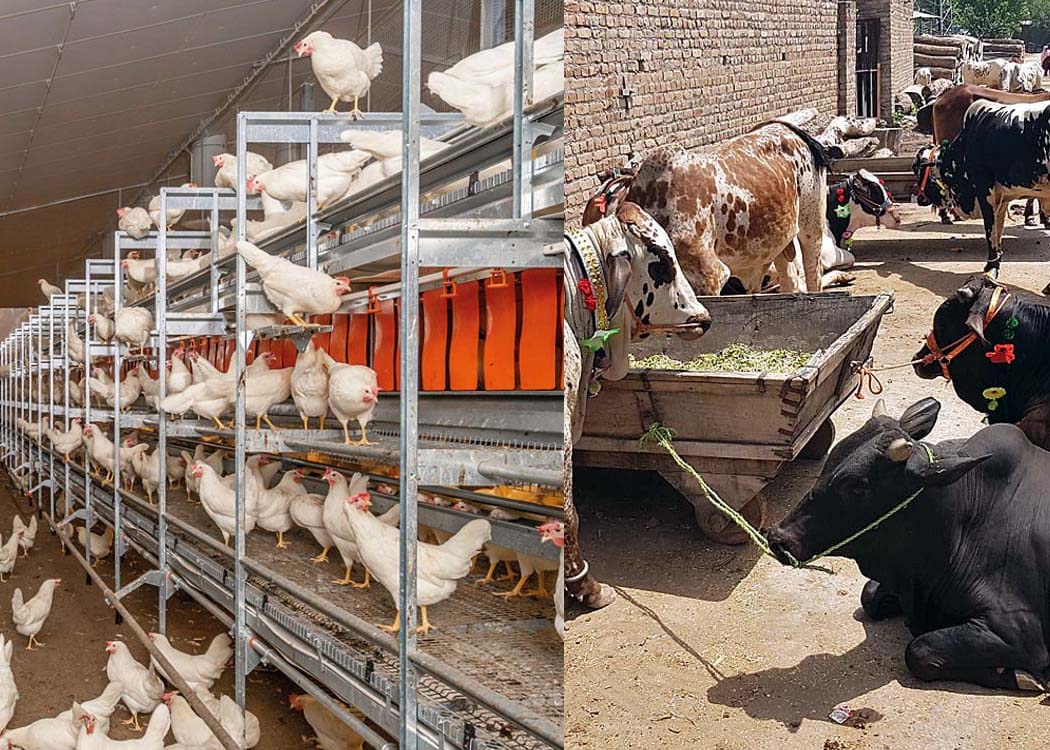
Economic Survey 2025–26 highlights continued expansion in poultry and livestock sectors, driven by commercialization, rising demand for protein, and steady productivity gains despite inflation, feed costs, and disease risks
ISLAMABAD: Pakistan’s poultry and livestock sectors continued to demonstrate resilient expansion during FY2025–26, according to the Pakistan Economic Survey 2025–26, reaffirming their central role in national food security, rural livelihoods, and agricultural GDP.
Together, livestock and poultry remain the backbone of Pakistan’s agriculture economy, contributing a dominant share to agricultural value addition and employing millions of rural households across the country. Despite persistent challenges including rising feed costs, disease pressures, and supply chain inefficiencies, the sector maintained steady growth momentum in FY2025–26.
Livestock remains the dominant economic driver
According to the Economic Survey 2025–26 framework, livestock continues to be the largest sub-sector of agriculture, contributing approximately 14–15 percent to national GDP and more than 60 percent of agricultural value addition.
The sector recorded steady growth (around mid-4 percent range in recent national accounts trends), supported by:
- Expanding dairy production systems
- Increasing meat demand
- Gradual improvements in animal health and breeding management
- Rising commercialization in peri-urban farming systems
Livestock also continues to play a critical socio-economic role, supporting rural incomes and absorbing a large informal workforce engaged in cattle rearing, milk collection, and meat supply chains.
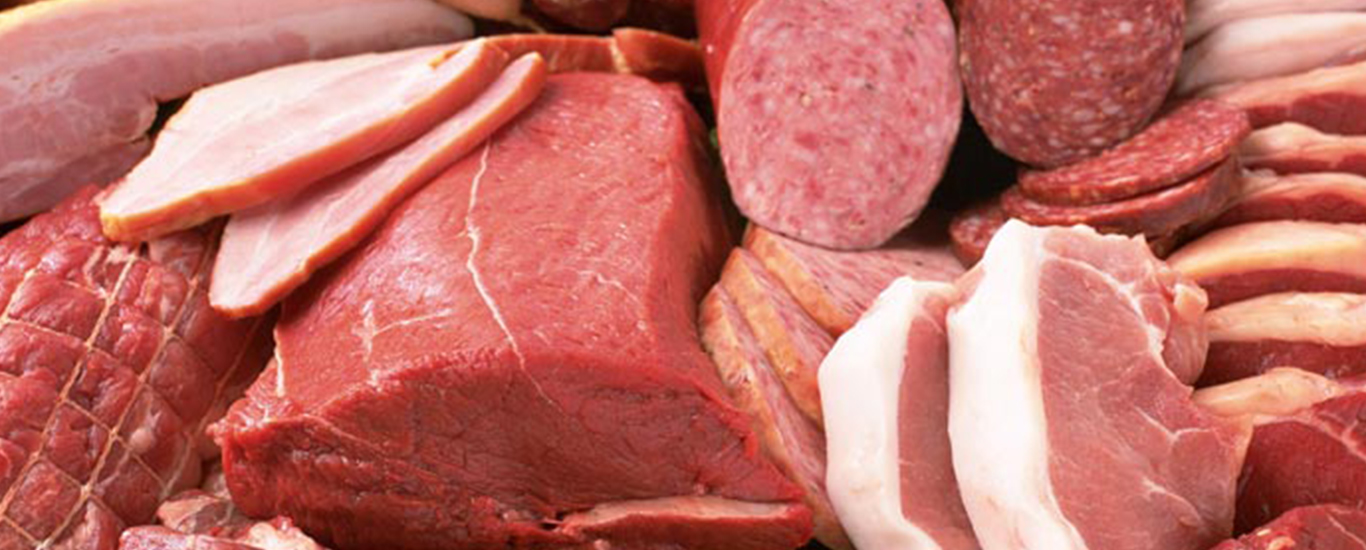
Milk production remains the largest output component, with Pakistan producing over 70 billion liters annually, while meat production has remained close to 6 million tonnes, driven by both beef and poultry expansion.
Poultry sector maintains strong structural growth
The poultry industry remains one of the fastest-growing agro-based industries in Pakistan, expanding at an estimated 8 percent annual long-term growth trend, according to the Economic Survey 2025–26 historical series.
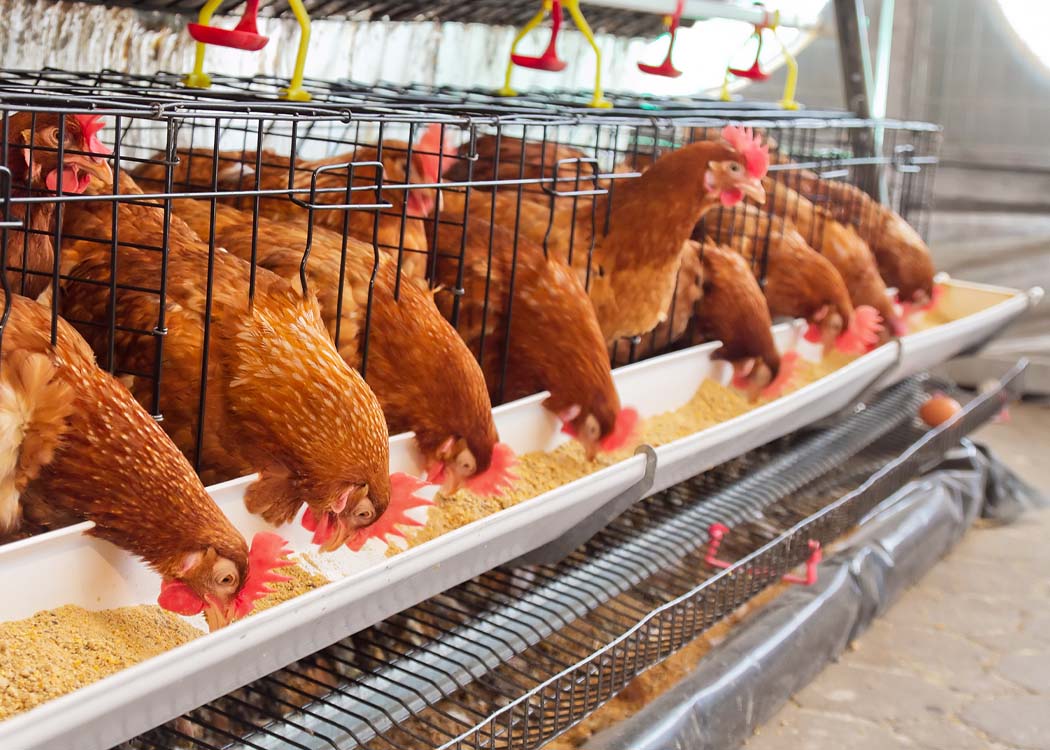
The sector has become increasingly industrialized, with commercial poultry dominating national supply.
Key structural indicators include:
- Total poultry population: around 2.2–2.3 billion birds
- Commercial poultry share: overwhelmingly dominant (broilers forming the bulk)
- Egg production: around 26–27 billion eggs annually
- Poultry meat output: approximately 2.5–2.6 million tonnes
This expansion reflects a shift toward intensive farming systems, vertically integrated feed production, and large-scale hatchery operations.
Poultry now contributes more than 40 percent of Pakistan’s total meat consumption, making it the most affordable and widely consumed protein source in the country.
Rising demand amid affordability pressures
Despite strong production growth, retail market dynamics continue to place pressure on consumers. While farm-level production has expanded, retail poultry prices remain volatile due to:
- Feed cost inflation (major cost driver in poultry production)
- Transport and cold chain inefficiencies
- Seasonal demand spikes
- Market intermediation margins
- Disease-related supply disruptions
As a result, consumers often experience limited relief even during periods of higher production or reduced farm-gate prices.
This structural disconnect between farm production and retail pricing remains a key challenge highlighted indirectly in the survey’s agricultural market framework.
Shift toward protein substitution in Pakistan’s food economy
The Economic Survey 2025–26 reinforces a long-term structural shift in Pakistan’s dietary consumption pattern:
- Poultry increasingly replacing beef and mutton due to affordability
- Rising urban demand for processed chicken products
- Expansion of fast-food and restaurant poultry consumption
- Continued price sensitivity among low- and middle-income households
While beef and mutton prices remain significantly higher, chicken continues to serve as the primary accessible protein source for a large segment of the population.
Sector outlook: growth with structural constraints
The livestock and poultry sectors are expected to remain key growth drivers of agriculture in FY2025–26 and beyond, supported by:
- Population growth and urbanization
- Rising protein consumption
- Commercial farming expansion
- Improved veterinary and breeding systems
However, structural risks persist:
- Feed dependency on imported inputs
- Disease outbreaks (especially poultry sector vulnerability)
- Price transmission gaps in supply chains
- Limited modernization in smallholder livestock systems
The Economic Survey emphasizes that future gains will depend on improving productivity, strengthening disease control systems, and enhancing value-chain efficiency to ensure that production growth translates into consumer affordability.