

Pakistan’s biggest poultry gathering opens in Lahore as chicken and egg prices put fresh pressure on consumers, while overseas floods disrupt egg supply, scientists test a new way to make raw chicken safer, and major investments signal where the global poultry industry is heading.
LAHORE: Pakistan’s poultry industry has entered an unusually active week, with the 26th International Poultry Expo (IPEX-2026) opening in Lahore against a backdrop of rising domestic chicken prices and a series of global developments involving egg shortages, food safety, disease control, technology and new investment.
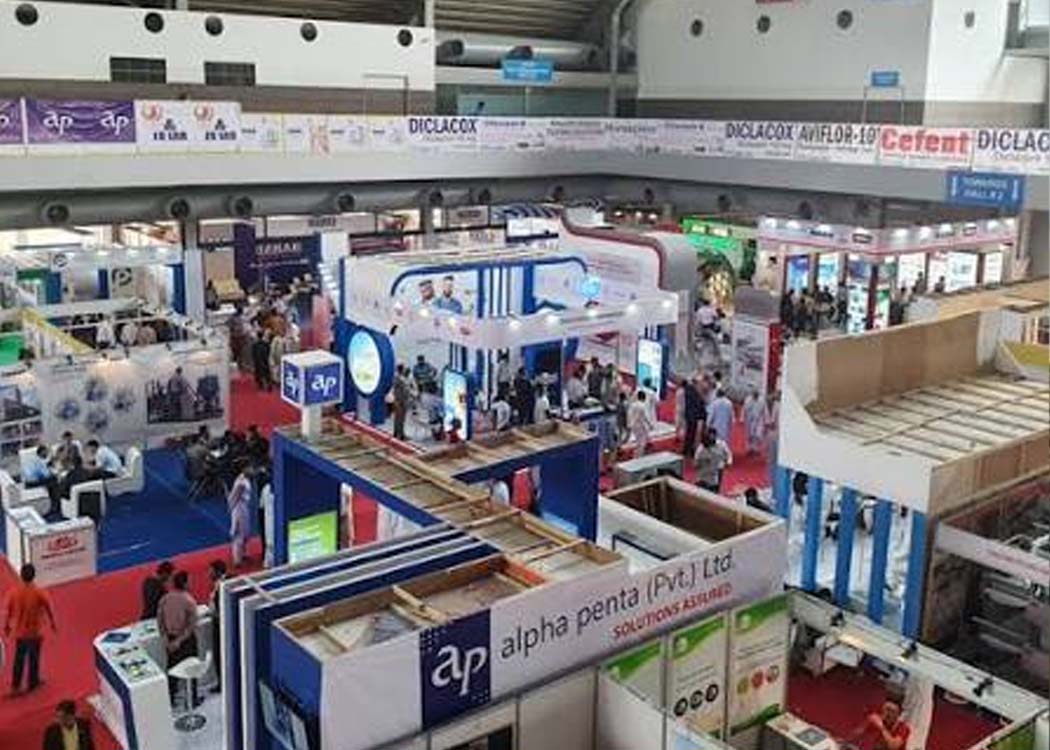
The Pakistan Poultry Association is hosting IPEX at the Expo Centre Lahore from October 8 to 10, with organisers expecting more than 100,000 visitors and business professionals, over 500 international delegates and participation from more than 50 foreign companies. The exhibition brings together businesses across feed and nutrition, vaccines and animal health, genetics, farm machinery, processing, automation and poultry marketing.
Dr. Rana Sajjad Arshad, Chief Organizer of IPEX-2026, and `Malik Muhammad Sharif, Chairman of IPEX-2026 and Vice Chairman of the Pakistan Poultry Association Northern Region, have positioned the event as a platform not only for trade but also for technology transfer and scientific exchange.
That science component is taking place alongside the exhibition through the Poultry Science Conference 2026, organised by the University of Veterinary and Animal Sciences, Lahore, in partnership with the Pakistan Poultry Association. Its theme — “Shaping the Future of Poultry: Innovation, Resilience, and Food Security” — reflects many of the pressures now confronting producers in Pakistan and internationally.
The timing is significant because poultry prices have again become a consumer issue in Pakistan.
The Pakistan Bureau of Statistics reported that chicken recorded the largest weekly increase among items monitored through the Sensitive Price Indicator for the week ending October 1, rising 7.25%, while egg prices increased 0.72%. Overall weekly inflation rose 0.21%.
Retail pressure was also visible in Peshawar, where a market survey published on October 5 reported chicken rising from Rs350 to Rs380 per kilogram, while farm eggs increased from Rs240 to Rs260 per dozen. Traders linked broader food-price increases to changing fuel and operating costs.
For Pakistan’s poultry industry, affordability therefore remains closely connected with feed, energy, disease control, farm efficiency and supply-chain performance — precisely the areas receiving attention at IPEX.
But the same pressures are playing out differently elsewhere.
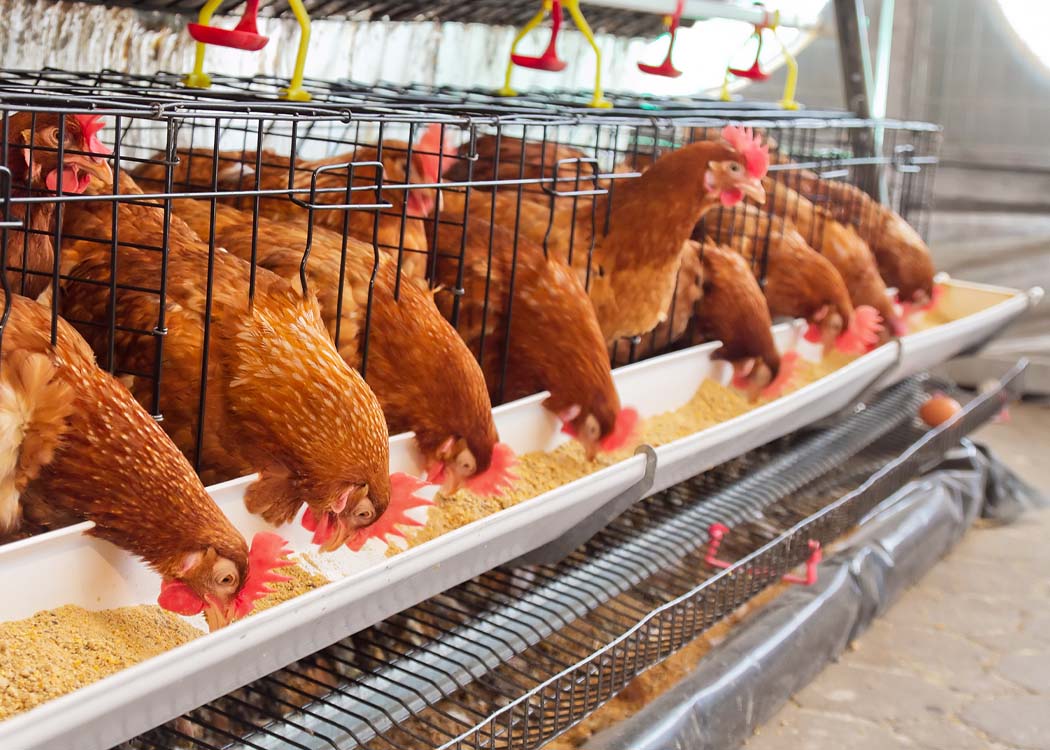
In Thailand, severe flooding has damaged poultry production and killed laying hens, prompting authorities to ask companies to reduce egg exports by 30% to 50% until December in an effort to protect domestic supplies. The move shows how quickly extreme weather can move from farms into retail food availability and trade policy.
Food safety, meanwhile, is producing a very different kind of poultry story.
Researchers at the University of Reading, working with the Animal and Plant Health Agency, reported on October 6 that a low-power violet-blue light technique successfully killed all 64 Campylobacter strains tested in laboratory experiments, including antibiotic-resistant strains. Campylobacter is a major cause of bacterial food poisoning and is frequently associated with raw poultry.
The technique, called violet-blue photodynamic inactivation, uses visible light to trigger destructive compounds inside bacterial cells without adding antibiotics or chemical disinfectants. Researchers found no evidence of resistance developing during repeated laboratory exposure.
The technology is not yet ready for routine poultry processing. Scientists say it still needs testing on naturally contaminated chicken carcasses and in real processing environments. But if those studies are successful, researchers believe inexpensive LED-based systems could eventually provide poultry processors with another tool for reducing contamination before chicken reaches consumers.
Egg technology is also attracting fresh investment.
North Carolina State University announced on October 7 that it had received a $3.5 million award from the U.S. Department of Agriculture’s National Institute of Food and Agriculture to establish the National Egg Science and Technology programme. The planned facility will combine layer production and egg processing for research, workforce training and innovation as the industry adapts to rapidly changing production systems and automation.
Large-scale poultry investment is continuing elsewhere as well.
In the United States, Bell & Evans is investing $152 million to expand poultry processing operations in Pennsylvania. The project includes a 50,000-square-foot expansion, is expected to create at least 382 jobs and will increase further-processing and packaging capacity.
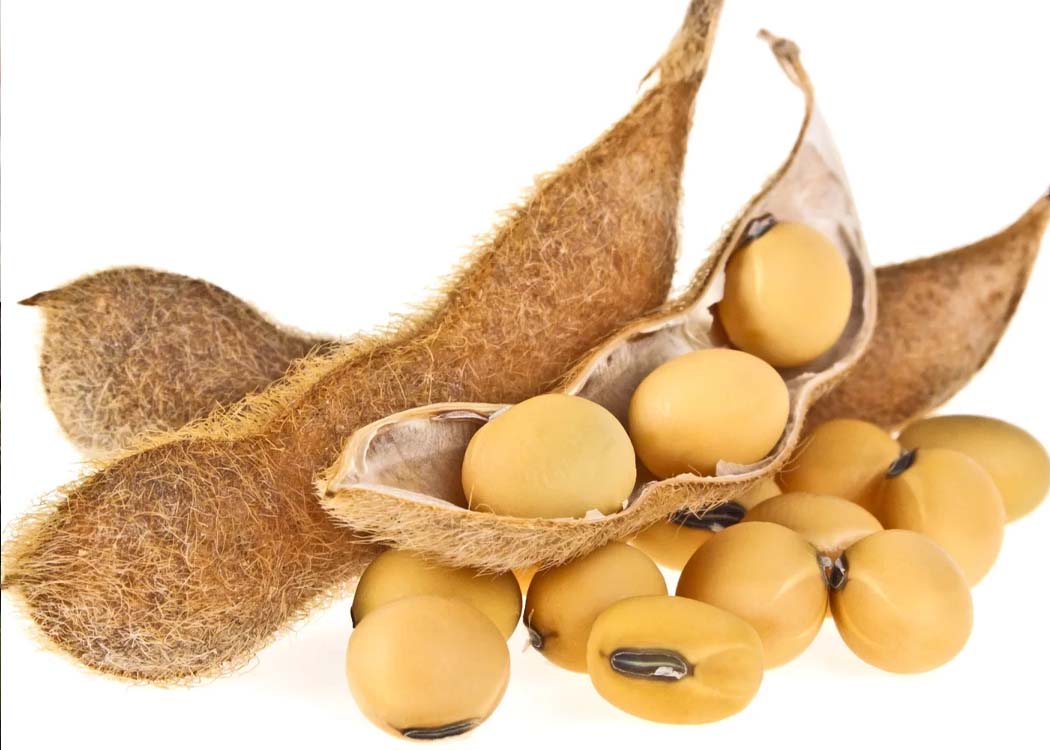
In Africa, Senegalese poultry group Sedima is moving ahead with a roughly $35 million integrated poultry and grain complex in the Republic of Congo, bringing maize and soybean production, hatchery operations, poultry farms and chicken processing into one system. The planned project is designed to produce around 2,200 tonnes of broiler chicken annually while reducing reliance on imported poultry and feed.
Disease remains another unresolved threat.
The U.S. Department of Agriculture continues to track highly pathogenic avian influenza, warning that infected wild birds can carry the virus over long distances and expose domestic poultry populations. The persistence of HPAI keeps biosecurity, surveillance and rapid disease response high on the agenda for poultry producers globally
Taken together, the developments of the past week show an industry being pulled in several directions at once.
Consumers want affordable chicken and eggs. Producers are under pressure to control feed, energy and disease costs. Governments are being forced to respond to climate-related supply disruptions. Scientists are trying to make poultry safer without adding to antimicrobial-resistance concerns. And companies are investing heavily in automation, integrated production and processing capacity.
That makes the discussions taking place at IPEX-2026 particularly timely for Pakistan.
The future of the poultry sector will not be determined only by how many birds farms can produce. Increasingly, competitiveness will depend on food safety, disease resilience, feed security, processing efficiency, technology adoption and the ability to keep chicken and eggs affordable for consumers.
For Pakistan — where poultry remains one of the most accessible sources of animal protein — those questions extend well beyond the exhibition halls in Lahore.
They increasingly sit at the intersection of food security, household affordability and the future resilience of the national food system.