

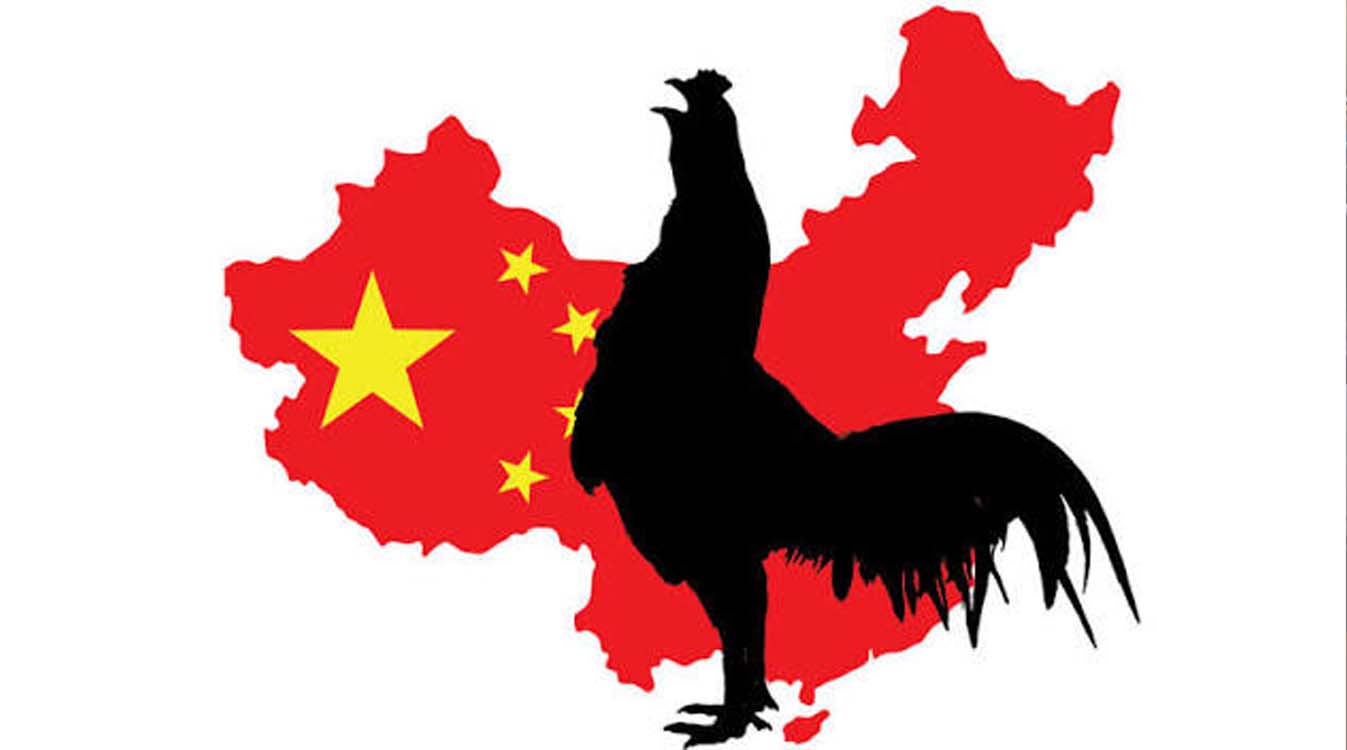
Rapid production growth and surging exports are turning China into a major emerging poultry exporter, with the Middle East, Asia and Africa among potential battlegrounds.
BEIJING: China could emerge as a serious challenger to Brazil in international chicken markets within the next decade as rapidly expanding domestic poultry production generates growing exportable supplies, according to Chenjun Pan, senior analyst of animal protein at Rabobank.
Pan said China could increasingly compete with Brazil in key chicken meat markets, including the Middle East, Asia and Africa, as the country shifts from being predominantly a major poultry-consuming and importing market toward a significant global exporter.
The assessment comes as independent trade and production data show that China’s poultry industry is already undergoing a rapid expansion. Chinese chicken meat exports rose sharply in 2025 and accelerated further during the first five months of 2026, while domestic poultry production also continued to grow.
China is rapidly becoming an export force
China’s transformation is particularly striking because the country has traditionally been an important importer of chicken meat.
According to the US Department of Agriculture (USDA) Foreign Agricultural Service, China’s chicken meat exports reached 546,000 metric tons during January-May 2026, an increase of about 51% from the same period a year earlier. The surge prompted the USDA to raise its forecast for China’s full-year chicken exports.
USDA global trade data also point to a dramatic change in China’s position in international poultry trade. China’s share of global chicken exports has risen substantially in recent years, while its role as a major importer has diminished.
USDA’s April 2026 global poultry outlook forecast Chinese chicken exports at about 1.4 million metric tons for 2026, compared with Brazil’s roughly 5.2 million tons.
That means China is still nowhere near Brazil’s export scale. But the direction of travel is important: China’s export base is expanding rapidly while Brazil already operates from a much larger base.
Production growth is creating more chicken to sell abroad
The foundation of China’s export push is its expanding poultry industry.
China’s official statistics show that the country produced 28.37 million metric tons of poultry meat in 2025, up 6.7% from 2024. Poultry production therefore grew faster than several other major livestock categories during the year.
The growth has continued into 2026.
Rabobank’s global poultry research identifies China among the major markets contributing to strong global poultry production growth. Its 2026 outlook raised expected global poultry market growth to 3%-3.5%, with production expanding strongly in several major markets, including China.
The expanding supply is particularly significant because domestic Chinese consumers do not demand every chicken cut in equal quantities.
The chicken cuts China has in surplus matter
One of the factors behind China’s export expansion is the country’s product mix.
Chinese consumers have traditionally shown stronger demand for certain chicken parts, while products such as breast meat can be relatively less favored domestically. As production increases, surplus supplies of particular cuts can therefore be directed toward overseas markets.
That gives Chinese producers a commercial incentive to expand exports rather than relying entirely on additional domestic consumption.
USDA data indicate that breast meat has become an important component of China’s recent export growth, with breast products accounting for more than half of Chinese chicken meat exports during the first quarter of 2026.
This product imbalance could become increasingly important as China’s production capacity expands.
Middle East emerges as a potential battleground
The Middle East is particularly significant in the potential competition between China and Brazil.
China’s poultry exports are increasingly reaching markets beyond its traditional destinations in East Asia. Chinese shipments to countries including the United Arab Emirates, Bahrain and Iraq have grown sharply, while Chinese poultry exports to Africa have also expanded.
This matters because the Middle East is already an important destination for internationally traded chicken and a major market for established exporters such as Brazil.
For China, gaining additional market share in the region could provide an outlet for its growing production surplus.
For Brazil, meanwhile, greater Chinese competition could eventually mean another major supplier competing for buyers on price, product availability and supply reliability.
Brazil remains far ahead
Despite China’s rapid expansion, Brazil’s position as the world’s leading chicken exporter remains firmly established.
Brazil exported a record 5.324 million metric tons of chicken meat in 2025, according to the Brazilian Association of Animal Protein (ABPA). That was several times China’s export volume.
Brazil also benefits from a highly diversified export network and extensive experience supplying international markets.
The competitive gap is therefore still substantial.
China’s projected 2026 exports of around 1.4 million tons would amount to only about one-quarter of Brazil’s projected volume.
But the issue raised by Pan is not that China is about to overtake Brazil. Rather, it is that China’s rapid growth could make it a meaningful competitor in markets where both countries seek to expand or defend market share.
China is already moving into new markets
The geographical pattern of Chinese exports suggests that this process has already begun.
Traditional markets such as Japan and Hong Kong remain important, but China’s export growth is increasingly being supported by new destinations across Southeast Asia, Central Asia, the Middle East and Africa.
Recent industry analysis shows particularly rapid increases in Chinese poultry shipments to markets including the Philippines, Cambodia, Malaysia, Kyrgyzstan, Russia and Iraq.
Africa has also become an increasingly important destination. China’s chicken exports to African markets rose substantially in 2025, although Asia remains the core growth region for Chinese poultry exports.
The expansion gives China an increasingly diverse portfolio of buyers and reduces its dependence on a small number of established markets.
Bird flu rules could determine how far China can go
Production capacity alone, however, will not determine China’s future position in the global poultry market.
Animal-health requirements and market access could prove equally important.
Avian influenza remains one of the biggest factors affecting international poultry trade. Importing countries frequently impose restrictions following outbreaks, and differences in disease-control strategies can affect access to individual markets.
China’s use of avian influenza vaccination has also been relevant to international trade discussions. However, the World Organisation for Animal Health (WOAH) says vaccination itself does not have to prevent safe trade when appropriate surveillance and controls demonstrate the absence of infection.
WOAH international standards emphasize surveillance, certification and appropriate disease-control measures for poultry products moving across borders.
This creates both a challenge and an opportunity for China: expanding production can generate exportable supplies, but converting those supplies into sustained access to high-value international markets requires regulatory acceptance as well.
China’s export ambitions have a wider food-security backdrop
The poultry expansion also reflects changes in China’s domestic animal-protein sector.
Following the severe disruption caused by African swine fever between 2019 and 2021, China placed greater emphasis on diversifying its sources of animal protein and reducing excessive reliance on pork.
Poultry can be produced relatively quickly and offers an efficient source of animal protein, making it an important component of China’s broader livestock strategy.
The country’s 2025 statistics underline the scale of the sector. Alongside 28.37 million tons of poultry meat, China produced 34.98 million tons of eggs, although egg production declined 2.5% from the previous year.
The scale of China’s poultry industry means even a relatively small shift from domestic supply toward exports can have significant consequences for international markets.
What a China-Brazil contest could mean for global poultry
If China’s production and exports continue expanding rapidly, the implications could extend beyond the two countries.
Greater Chinese participation could increase competition in price-sensitive markets and potentially put pressure on exporters’ margins, particularly in products where China develops a strong cost or supply advantage.
A July 2026 analysis from BTG Pactual similarly warned that China’s rapidly expanding poultry exports could create a structural pricing challenge for Brazilian processors, particularly in chicken breast. The analysis estimated China’s share of global chicken exports could reach around 9.5% in 2026, compared with Brazil’s approximately 35%.
That would still leave Brazil comfortably ahead, but it would represent a significant change from China’s position only a few years ago.
The next decade could reshape the poultry map
For now, Brazil remains the clear global leader in chicken exports, while China is still operating at a fraction of Brazil’s export scale.
But the combination of rapid production growth, a growing exportable surplus, expanding processing capacity and new overseas markets is changing China’s role in global poultry trade.
Pan’s assessment that China could challenge Brazil in key markets within the next decade therefore rests against a trend already visible in trade data: China is becoming a much more important exporter at a time when its poultry production continues to expand.
The critical question will be whether China can translate that production growth into durable market access across the Middle East, Africa and Asia. If it succeeds, the global chicken trade could face a significantly more competitive landscape—with China’s producers increasingly competing not merely for export opportunities, but for markets long dominated by Brazil and other established poultry exporters.