

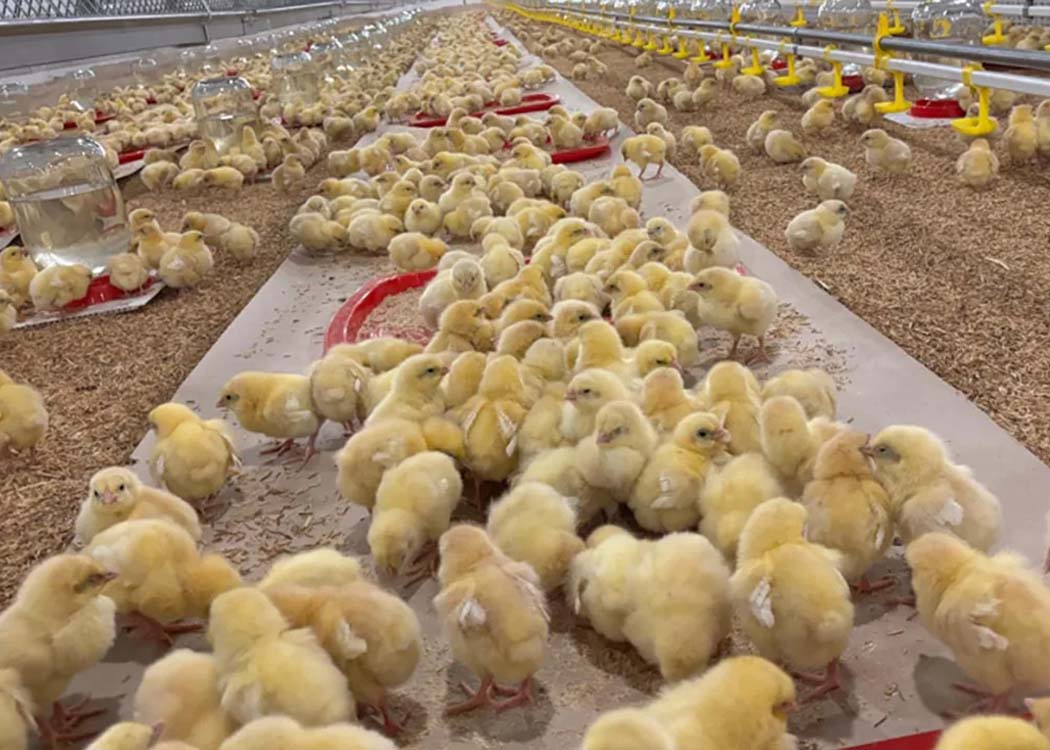
Cobb’s 2026 research grants will support eight projects focused on poultry genetics, bird health, welfare, production efficiency and product quality, with the findings expected to help shape the future of commercial poultry production.
SILOAM SPRINGS, Arkansas: Eight new research projects are set to explore how advances in poultry genetics and related sciences could shape the next generation of poultry production, after Cobb-Vantress, LLC awarded its 2026 Cobb Research Initiative (CRI) grants.
The funding marks the fourth annual research grant programme launched through the initiative, which brings together researchers from different scientific disciplines to address challenges affecting poultry health, welfare, efficiency and product quality.
The projects reflect an increasingly technology-driven approach to poultry breeding, where genetic research is being combined with data science, biological research, engineering and other disciplines to identify opportunities for improving commercial poultry production.
Eight projects focus on the future of poultry production
The 2026 research programme is centred on four broad areas: bird health, animal welfare, production efficiency and product quality.
These priorities are closely connected to the challenges facing poultry producers worldwide. Disease pressure, feed costs, flock performance, welfare expectations and the need to produce affordable animal protein more efficiently are all placing increasing demands on the poultry sector.
Cobb said the research initiative is intended to generate new knowledge and technologies that can contribute to genetic improvement and ultimately create value across the poultry supply chain.
The research will not immediately translate into new commercial breeds or production technologies. Instead, the projects represent an investment in the scientific knowledge that could inform future breeding and production decisions.
Why genetics could shape the next poultry era
Genetics plays a fundamental role in determining how poultry perform across a range of commercially important traits.
Breeding programmes can influence characteristics associated with growth, feed efficiency, reproductive performance, hatchability, livability, health and meat quality.
Cobb’s research priorities have included areas such as broiler and breeder livability, meat quality, hatchability, chick quality, egg fertility and egg production.
Improving these characteristics can have implications throughout the production chain—from breeding operations and hatcheries to farms, processors and ultimately consumers.
For an industry under pressure to produce more protein while using resources more efficiently, even incremental genetic improvements can become significant when applied across large commercial poultry populations.
Poultry research is becoming increasingly multidisciplinary
One of the important features of the Cobb Research Initiative is that it extends beyond conventional poultry science.
The programme has encouraged collaboration between poultry researchers and specialists working in areas such as engineering, data science, molecular biology and automation.
This multidisciplinary approach reflects the changing nature of animal breeding.
Modern poultry genetics increasingly depends on the ability to collect, analyse and interpret large volumes of biological and production data. New technologies can potentially help researchers identify desirable traits more accurately and accelerate the process of translating scientific findings into genetic improvement.
The eight projects funded in 2026 will add to this growing research base.
Health and welfare remain critical priorities
The drive for greater production efficiency does not mean that productivity is the only objective.
Cobb has identified bird health and welfare among the key areas for research, alongside efficiency and product quality.
Research into poultry health can help scientists better understand disease resistance and resilience, while work on livability may contribute to stronger flock performance.
Similarly, welfare-related research can help the industry understand how genetic selection and production systems interact with bird wellbeing.
For producers, the challenge is increasingly about finding ways to improve productivity without compromising flock health or welfare.
From research laboratories to commercial poultry farms
The ultimate value of research grants will depend on what happens after the scientific work is completed.
A discovery made through a research project may eventually lead to a new measurement technique, genetic selection strategy, management tool or understanding of a particular biological trait.
If validated and successfully incorporated into breeding programmes, such advances could eventually influence commercial poultry production.
Cobb has said findings from previous Cobb Research Initiative projects have already contributed to its genetic improvement efforts.
That creates a longer pathway from research funding to practical impact: scientific discovery → validation → genetic improvement → commercial breeding → poultry production.
The process can take years, meaning the significance of the 2026 grants will ultimately be measured by the innovations they help produce rather than by the funding announcement itself.
Cobb highlights collaboration behind research initiative
Dr. William Herring, Vice President of Research and Development at Cobb, said the quality and creativity of proposals submitted through the initiative demonstrate the potential of bringing together researchers from different scientific backgrounds.
He said the company is focused on identifying research capable of expanding understanding of poultry genetics and contributing to advances across the industry.
Shelby Watkins, President of Cobb, has also highlighted collaboration and exploration of new possibilities as important elements of the initiative, describing the programme as part of Cobb’s commitment to working with the scientific community to advance poultry genetics.
The company launched the Cobb Research Initiative in 2023, with the aim of fostering collaboration between poultry researchers and experts from other scientific fields.
Research priorities extend across the poultry value chain
Cobb’s research agenda has covered a broad range of issues, including animal health, nutrition, fertility, hatchability, management analytics and new genetic tools, alongside production efficiency and welfare.
That breadth reflects the interconnected nature of modern poultry production.
A healthier bird can potentially perform more efficiently. Better reproductive performance can strengthen breeding programmes. Improved hatchability and chick quality can affect flock productivity, while advances in meat quality can influence the value of the final product.
The eight 2026 projects therefore represent more than a focus on genetics alone. Together, they form part of a wider effort to address how poultry can be produced more efficiently, sustainably and responsibly.
The next generation of poultry production is already being researched
The latest Cobb grants highlight where the poultry industry is heading: toward greater use of genetics, data, technology and multidisciplinary science to address production challenges.
The immediate outcome will be new research rather than an overnight transformation of poultry farming.
But if the projects deliver meaningful discoveries, their influence could eventually extend from research institutions into breeding programmes and commercial poultry farms.
For an industry expected to meet growing demand for affordable animal protein while facing disease, cost, welfare and sustainability pressures, the next generation of poultry production may be determined not only by what happens on farms today, but by what researchers discover now.