

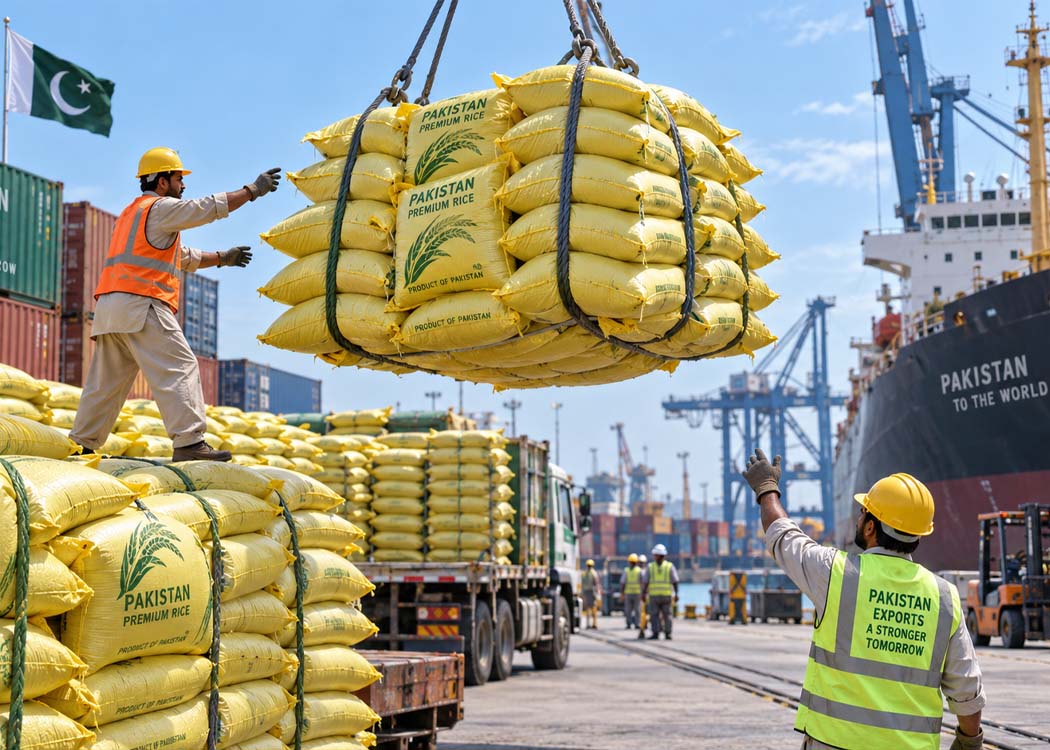
ISLAMABAD: Pakistan’s rice exports got off to a stronger start in the new fiscal year, with export earnings rising 23% to $394 million during July and August 2026, as higher shipment volumes and improved average prices boosted the country’s performance in international rice markets.
Pakistan exported 657,663 metric tonnes of rice during the first two months of fiscal year 2026-27, compared with 557,355 metric tonnes in the corresponding period of FY2025-26, representing an 18% increase in export volume. Export proceeds increased from $321 million to $394 million over the same period.
The increase in earnings was supported by both greater volumes and a modest improvement in the average export price. The average unit price of Pakistan’s overall rice exports rose 4% to $598 per tonne, from $576 per tonne a year earlier.
Basmati emerges as strongest performer
The premium Basmati rice segment recorded the sharpest growth during the two-month period, with export earnings climbing 53% to $165 million, compared with $108 million in July-August 2025.
Basmati shipments increased 44% to 147,626 metric tonnes, from 102,506 tonnes a year earlier. At the same time, its average export price rose by about 6.5% to $1,120 per tonne, compared with $1,052 per tonne in the corresponding period of the previous fiscal year.
The combination of higher volumes and stronger prices gave Basmati a particularly important role in the overall increase in Pakistan’s rice export earnings.
Non-Basmati exports also increase
Non-Basmati rice continued to account for the larger share of Pakistan’s export volume and also recorded year-on-year growth, although its average price moved in the opposite direction.
Export earnings from non-Basmati rice increased 7% to $228 million, from $213 million in July-August 2025-26. Shipments rose 12% to 510,037 metric tonnes, compared with 454,849 tonnes a year earlier.
However, the average unit price of non-Basmati rice fell 5% to $447 per tonne, from $469 per tonne. This indicates that the increase in earnings in this segment was driven primarily by higher shipment volumes rather than stronger prices.
Strong opening for Pakistan’s rice export sector
The July-August figures represent a positive opening to Pakistan’s rice export performance in FY2026-27, with total shipments increasing by more than 100,000 tonnes compared with the same period last year.
The contrasting performance of the two major segments also highlights the strength of Pakistan’s Basmati exports. While both Basmati and non-Basmati rice recorded higher shipment volumes, Basmati benefited from simultaneous growth in both export volume and average price.
The latest figures provide an early indication of stronger momentum for Pakistan’s rice export sector, although sustained growth will depend on export demand, international prices, crop availability and the competitiveness of Pakistani rice in global markets.