

Rana Tanveer highlights veterinary laboratory upgrades, poultry disease testing and expansion of electronic surveillance system under Pakistan’s US$18.7m Pandemic Fund programme
ROME: Pakistan has called for greater international investment in animal health, disease surveillance and One Health systems, warning that stronger action at the human-animal-environment interface is essential to detect and contain emerging health threats before they develop into wider crises.
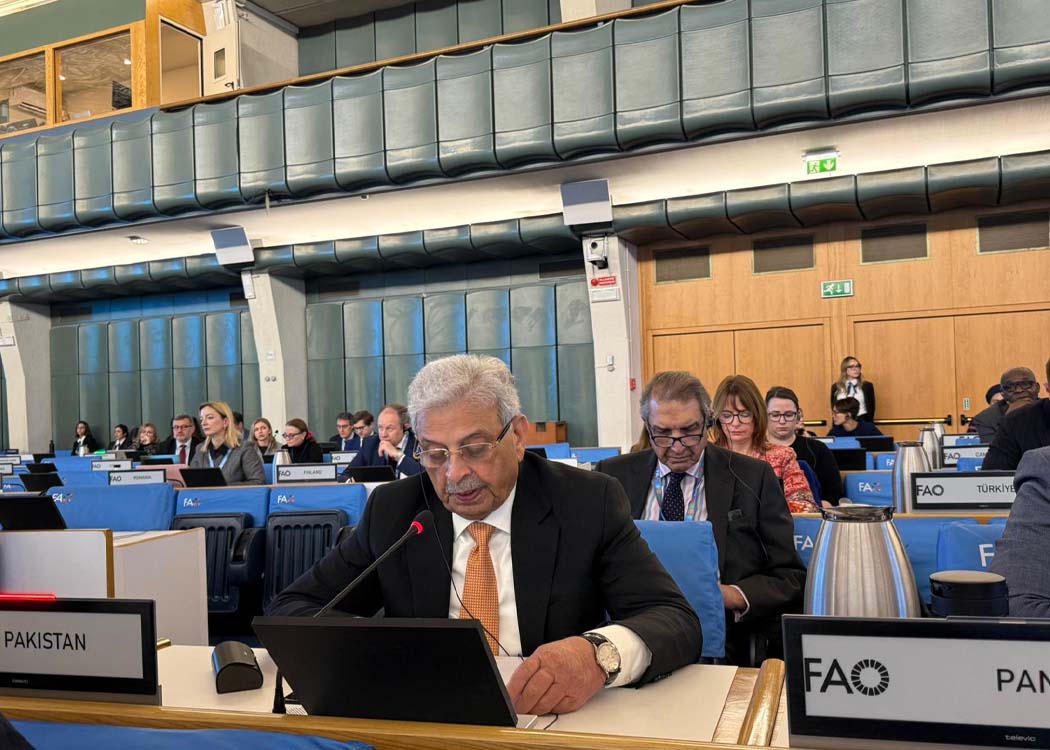
Federal Minister for National Food Security and Research Rana Tanveer Hussain made the call while addressing a high-level session at the Food and Agriculture Organization (FAO) headquarters in Rome on strengthening animal health systems and preventing future pandemics.
The minister said pandemic preparedness must begin “upstream” by strengthening the systems responsible for identifying disease threats in animals and the environment, particularly in countries where people, livestock and ecosystems have close and frequent interactions.
For Pakistan, he said, the issue has implications extending beyond public health because animal health is closely linked with food security, rural livelihoods and the national economy.
Pakistan has a large livestock population, substantial human-animal interaction, high population mobility and recurring climate-related shocks, creating a complex One Health environment in which diseases can cross boundaries between people, animals and ecosystems, according to the government.
Pakistan’s Pandemic Fund programme
Rana Tanveer highlighted progress under Pakistan’s Pandemic Fund programme, under which the country was awarded approximately US$18.7 million.
The programme has additionally mobilised about US$4.1 million in co-financing and US$49.7 million in co-investment, according to the government. The Pandemic Fund independently lists Pakistan’s approved funding at approximately US$18.68 million, with US$4.143 million in co-financing and US$49.66 million in co-investment.
The programme is being led by the Ministry of National Health Services, Regulations & Coordination in coordination with the Ministry of National Food Security and Research and the Ministry of Climate Change. The World Health Organization, FAO and Asian Development Bank are implementing partners.
The Pandemic Fund project is designed to strengthen One Health coordination, disease surveillance, laboratory capacity, workforce preparedness and community participation in early detection and response. Its surveillance component specifically includes livestock, poultry, wildlife and fisheries.
One Health network expands across Pakistan
Rana Tanveer said substantial progress had been achieved in less than 18 months of implementation.
A National One Health Secretariat is operational at the National Institutes of Health, while One Health units and coordination committees have been established in five of the country’s six regions, according to the minister.
The government is also strengthening coordination between human, animal and environmental health authorities so that disease threats can be identified and addressed through a coordinated response rather than separate sectoral systems.
The Pandemic Fund project envisages extending integrated disease surveillance and response functions across Pakistan’s districts and incorporating wildlife and fisheries into the animal disease surveillance framework.
Veterinary laboratory network receives upgrade
Animal disease diagnosis is another major component of the programme.
The minister said work to strengthen Pakistan’s veterinary laboratory network was approximately three-quarters complete. Provincial veterinary laboratories have been surveyed, upgrade plans finalised and guidelines prepared for the collection and transportation of samples.
He also highlighted the enrolment of Pakistan’s first national poultry laboratory in international proficiency testing, a development aimed at strengthening the reliability and quality of poultry disease diagnostics.
The Pandemic Fund’s project framework includes upgrading the National Reference Laboratory for Poultry Diseases, alongside improvements to other veterinary and human-health laboratories, laboratory information systems, sample transportation and external quality assessment.
Electronic disease surveillance system being expanded
Pakistan is also developing an upgraded electronic Animal Disease Reporting and Surveillance System, with the endorsement of all provinces and regions.
According to the minister, the expanded system will strengthen disease surveillance across livestock while extending coverage to wildlife and aquaculture, allowing information from a broader range of animal and environmental settings to feed into national preparedness mechanisms.
The Pandemic Fund project similarly identifies integration of wildlife and fisheries surveillance as part of the effort to strengthen Pakistan’s capacity to detect zoonotic and emerging disease threats.
Rapid response teams and field epidemiology training
The programme also includes the development of multisectoral rapid response teams at provincial and district levels.
Rana Tanveer said field epidemiology training would help professionals from human health, veterinary and environmental sectors work together when responding to disease threats.
The Pandemic Fund’s implementation plan includes training for outbreak investigation, risk assessment, laboratory biosafety and diagnostic testing, as well as field epidemiology programmes involving veterinarians and, in relevant areas, wildlife professionals.
The approach is intended to improve the country’s ability to move from disease detection to investigation and coordinated response.
Animal health placed at centre of pandemic preparedness
Rana Tanveer argued that animal health should be treated as a central component of pandemic prevention rather than as a separate veterinary concern.
“Animal health is not the periphery of pandemic prevention for a country like Pakistan; it is the front door,” he said, calling for sustained investment in animal and environmental health.
He said early investment in these systems could help reduce the human and economic costs associated with future disease outbreaks.
Pakistan also offered to share its experience of implementing the One Health approach within a large federal system and called for continued cooperation with FAO, the Pandemic Fund Secretariat and other member states.
The minister further appreciated FAO’s technical expertise and field presence in strengthening animal health systems and advancing One Health, while calling for sustained international cooperation and financing to consolidate progress in pandemic prevention, preparedness and response.