

Financial Times investigation highlights widespread antibiotic use in Pakistan’s poultry sector, while researchers warn intensive chicken farming can amplify drug-resistant bacteria with consequences for human health
FAISALABAD: Pakistan’s rapidly expanding poultry industry is facing growing scrutiny over the use of antibiotics on chicken farms, with experts warning that intensive production systems could contribute to the emergence and spread of drug-resistant bacteria that threaten both animal and human health.
A Financial Times investigation published Sept. 6 examined poultry farms around Faisalabad and found that antibiotic use remains widespread, despite growing awareness among some farmers about the risks of antimicrobial resistance (AMR). The investigation also highlighted efforts by individual farmers to reduce their dependence on antibiotics through stronger biosecurity and improved farm management.
The issue extends beyond whether antibiotics are being used to treat sick birds. Experts are increasingly concerned about routine and inappropriate use of medically important antibiotics in intensive poultry production, where large numbers of birds live in close proximity and bacteria can spread rapidly.
A poultry industry at the centre of a growing health concern
Pakistan’s poultry industry has expanded rapidly over the past decade, driven by rising demand for affordable animal protein.
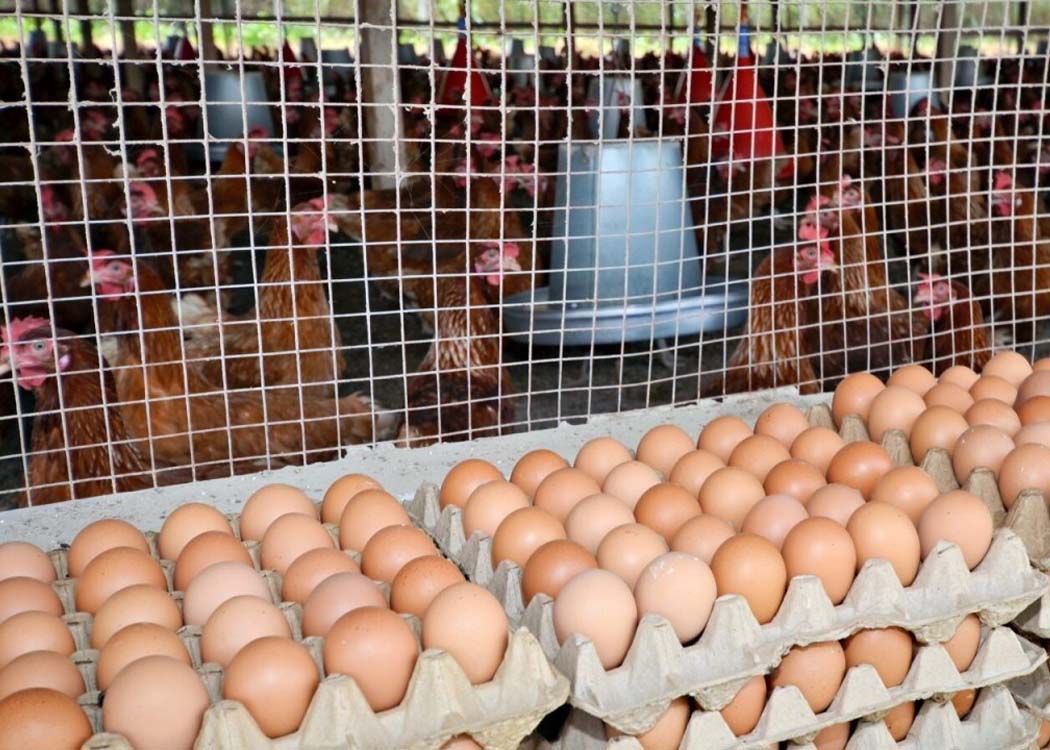
According to the Financial Times investigation, chicken production has grown by an average of about 10% annually over the past decade, with more than 17,000 broiler farms across Punjab. Older open-sided poultry houses have increasingly been replaced by large commercial sheds capable of holding tens of thousands of birds.
That expansion has helped increase the availability of chicken meat, but it has also created conditions in which infectious organisms can circulate efficiently.
Researchers at the United Kingdom-based Ineos Oxford Institute for Antimicrobial Research have described densely populated chicken flocks as potential ecological “pathogen sponges” — environments capable of absorbing and amplifying bacterial strains from different sources.
A July study led by researchers at the University of Oxford found that the expansion of industrial poultry farming has dramatically increased the movement and mixing of Campylobacter between chickens and wild birds. The researchers analysed nearly 2,800 bacterial genomes collected from chickens and wild birds in 30 countries between 1979 and 2024.
The study estimated that movement of Campylobacter strains between chickens and wild birds has increased more than 100-fold compared with the period before widespread poultry domestication.
Antibiotic use remains widespread
The Financial Times investigation cited a 2023 study of poultry farms in rural Punjab, which found that all surveyed farms used antibiotics.
About 60% of the farms reportedly used antibiotics without a prescription, while almost half used them partly for growth promotion. The investigation also reported that a majority of the farms used colistin, an antibiotic considered important in human medicine, while about one-third used fluoroquinolones, another class considered critically important for human health.
Such practices matter because antibiotic exposure can select for bacteria that survive treatment. Those resistant organisms can then multiply and potentially move through animals, food, people and the environment.
The concern is not that every chicken carrying bacteria will make a person sick. Rather, the public-health risk lies in creating and maintaining environments where resistant organisms can emerge, persist and spread.
The US Centers for Disease Control and Prevention says antimicrobial-resistant organisms have been identified in poultry and other livestock, as well as in food produced from these animals, and identifies livestock and poultry producers as important partners in preventing the development and spread of resistance.
How resistant bacteria can reach people
Poultry can become part of a wider One Health chain connecting animal health, human health and the environment.
Drug-resistant bacteria can potentially reach people through contaminated food, direct contact with animals, farm environments and other routes. Pathogens such as Salmonella, Campylobacter and certain strains of Escherichia coli can cause human disease, while resistance can make some infections more difficult to treat.
The Financial Times investigation cited concerns that resistant bacteria may survive in birds without necessarily causing obvious disease in the flock and could subsequently reach the food chain.
Sir Peter Piot, a microbiologist and former director of the London School of Hygiene & Tropical Medicine, told the Financial Times that resistant bacteria do not necessarily have to kill poultry to become a concern because they can ultimately reach the market.
The World Health Organization has long recommended that farmers and the food industry avoid routinely using medically important antibiotics to promote growth or prevent disease in healthy animals.
Faisalabad farmer shows antibiotic reduction is possible
The Financial Times investigation also found examples of farmers attempting to reduce antibiotic use without abandoning disease-control measures.
Adnan Shoukat, a trained veterinarian who operates a poultry farm outside Faisalabad with about 54,000 chickens, has introduced stronger biosecurity measures at his farm.
Workers disinfect vehicles and footwear before entering poultry houses, while the birds’ drinking water is treated with citric acid to help control bacterial growth. Large fans are also used to improve ventilation.
Shoukat told the Financial Times that these measures had helped reduce his annual antibiotic spending by about 25% per chicken. He said awareness among farmers, consumers and the government about the dangers of excessive antibiotic use had increased.
The example illustrates a central challenge for the poultry sector: reducing antibiotic dependence requires alternatives that can maintain flock health and productivity.
Feed and veterinary medicines under scrutiny
The investigation also raised concerns about the availability of antibiotics and antibiotic-containing products outside tightly controlled veterinary channels.
Mashkoor Mohsin Gilani, a microbiologist at the University of Agriculture Faisalabad who has studied antibiotic use in Pakistan’s poultry industry, told the Financial Times that some feed manufacturers may add antibiotics to poultry feed despite regulatory requirements concerning their use and labelling.
The report also cited industry concerns that raw materials used to make powerful antibiotics can reach village markets and subsequently be used in livestock, including during the early stages of a chick’s life.
These claims point to a broader regulatory challenge: controlling antimicrobial resistance requires more than educating farmers. It also requires effective oversight of veterinary medicines, feed manufacturers, distribution channels, prescribing practices and antimicrobial residues.
Chicken is critical to Pakistan’s food supply
Any attempt to reduce antibiotic use in poultry must also account for the industry’s importance to Pakistan’s food security and household budgets.
The Financial Times reported that chicken and eggs account for roughly one-third of Pakistan’s protein consumption, making poultry an important source of relatively affordable animal protein.
Arfan-ur-Rahman Gill, director of marketing at Faisalabad-based A&K Pharmaceuticals, told the newspaper that sharply reducing antibiotic use could place greater demands on farm hygiene and husbandry, particularly if disease-related bird losses increase.
A&K Pharmaceuticals is investing in alternatives such as probiotics that can help inhibit harmful bacteria including Salmonella, according to the report.
This highlights why antimicrobial stewardship in poultry cannot simply mean eliminating antibiotics. Antibiotics remain essential medicines when animals are genuinely ill. The challenge is to ensure that they are used appropriately, while disease prevention increasingly relies on biosecurity, vaccination, hygiene, ventilation, nutrition and good husbandry.
Climate change could add another layer of risk
Pakistan’s AMR challenge is also being complicated by environmental factors.
The Financial Times reported that increased rainfall and flooding can create conditions that facilitate the movement of microbes and the transfer of genetic material associated with antimicrobial resistance.
That concern fits within the broader One Health understanding of AMR: resistance does not remain confined to hospitals or farms. Resistant organisms and resistance genes can circulate between humans, animals and the environment.
For Pakistan, where major floods have repeatedly disrupted communities, agriculture and health infrastructure, the intersection of climate change, infectious diseases and antimicrobial resistance could become increasingly important.
The wider global warning
The developments in Pakistan are part of a much larger global antimicrobial-resistance challenge.
The University of Oxford’s recent Campylobacter research found that the rapid expansion of industrial poultry farming has created conditions that allow bacterial strains to spread, mix and acquire traits that help them survive. The researchers described intensive poultry production as a major driver of the changing ecology of Campylobacter.
The implications extend beyond diarrhoeal disease. Poultry can also harbour drug-resistant forms of E. coli and Salmonella, both of which can cause serious human infections.
The Financial Times reported that 35% of genetically analysed Salmonella samples from domestic chicken products in the United States during the year to September 2025 showed resistance to three or more antibiotic classes, based on US Department of Agriculture data.
The World Organisation for Animal Health is calling for countries to phase out antimicrobial use solely to promote growth in healthy animals and strengthen biosecurity and vaccination as alternatives.
What Pakistan’s poultry sector needs next
The Faisalabad investigation underscores that antimicrobial resistance is not simply a problem for hospitals or doctors. It is also an agricultural, veterinary, food-safety and environmental issue.
For Pakistan’s poultry sector, the challenge is to preserve affordable chicken production while reducing unnecessary antimicrobial exposure.
That means stronger enforcement of existing regulations, better surveillance of antibiotic use and resistance, tighter control of veterinary medicines and medicated feed, improved farm biosecurity, vaccination and disease prevention, and greater access to practical alternatives such as probiotics.
It also means recognising the farmers who are already changing practices.
Shoukat’s experience suggests that better biosecurity can reduce dependence on antibiotics without abandoning efforts to protect poultry health. But individual farmers cannot solve AMR alone.
The larger question for Pakistan is whether its rapidly expanding poultry industry can continue meeting the country’s growing demand for affordable protein while ensuring that the medicines relied upon to treat infections in both animals and people remain effective. That makes antimicrobial resistance in poultry not merely an industry issue, but a public-health and food-security challenge that demands coordinated action across veterinary medicine, agriculture, food safety and human healthcare.