

Prime Minister Shehbaz Sharif approves reforms at NARC and pushes quality seeds, AI-led crop monitoring, farm finance and organic agriculture as government accelerates its Agriculture Innovation and Growth Plan 2026–27.
ISLAMABAD: Prime Minister Muhammad Shehbaz Sharif has directed a broad overhaul of Pakistan’s agricultural research, seed quality, crop forecasting and farm-support systems, calling for institutions to be brought closer to international standards as the government seeks to raise productivity and strengthen food security.
Chairing a high-level review meeting on agricultural-sector reforms, the prime minister said greater activation of research institutions was essential if Pakistan was to modernise farming, improve per-acre yields and ensure that small and medium-scale farmers benefit from technological and policy reforms.
He directed certified companies to ensure the availability of quality seeds and ordered the development of a comprehensive national system for estimating crop production in consultation with all relevant stakeholders.
The meeting also focused on how research institutions could be made more effective, with the prime minister approving reforms at the National Agricultural Research Centre (NARC) and directing their early completion.
Authorities were also instructed to strengthen both NARC and the Pakistan Agricultural Research Council (PARC) and align their work more closely with international standards.
Small farmers placed at the centre of reforms
The prime minister said supporting small and medium-scale farmers and improving their per-acre productivity remained among the government’s top priorities.
The agriculture reform agenda includes a mix of financial support, mechanisation, technology adoption, research and market development under the Agriculture Innovation and Growth Plan 2026–27.
Officials briefed the meeting that implementation of priority measures under the plan had been accelerated.
These include Kisan Ghar refinance, crop insurance, electronic warehouse receipt financing, farm machinery financing and the Prime Minister’s National District Development Programme.
The broader objective is to reduce financing constraints, improve access to modern agricultural machinery and strengthen the capacity of farmers to adopt newer production methods.
AI and digital tools move into agriculture planning
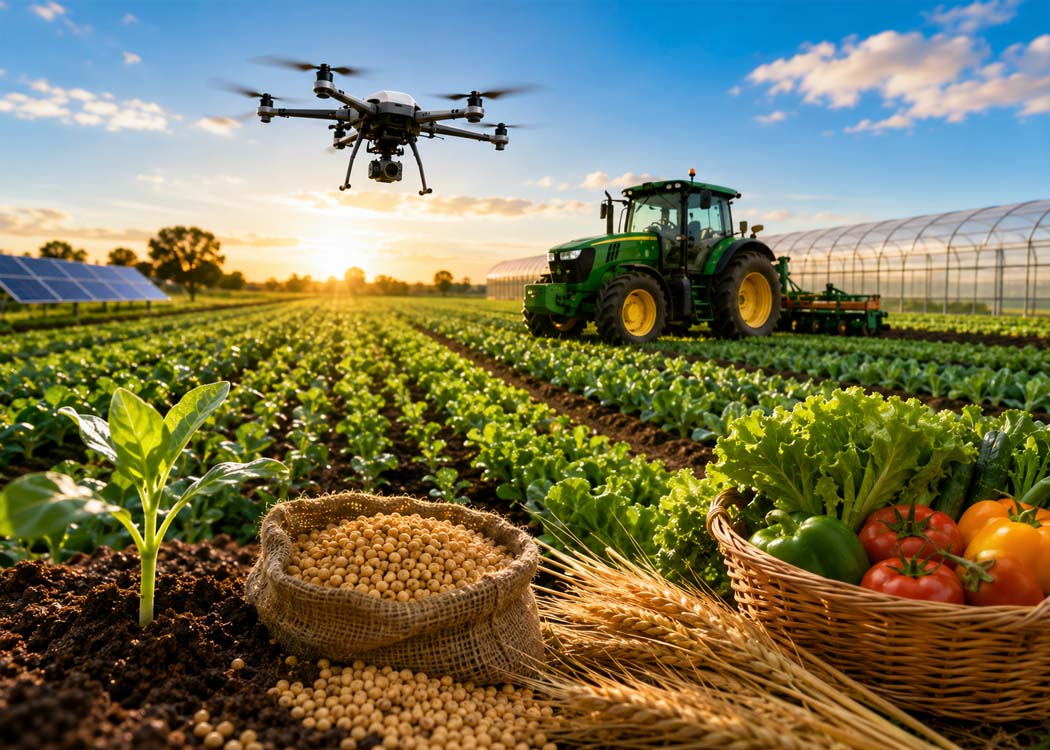
A major part of the government’s strategy is the use of modern technology and artificial intelligence in agriculture.
The meeting was informed that work was under way on the Pakistan Tobacco Board Automation Project, a crop-assessment programme being undertaken through SUPARCO, and an AI-based application for identifying pests and plants.
Several short-term technology initiatives have already entered the implementation stage.
The government is also seeking to improve the accuracy of crop-production estimates, an area that directly affects food-security planning, import decisions, price management and agricultural policy.
The prime minister directed that a national crop-estimation system be prepared in consultation with all stakeholders.
China-trained agriculture students to be utilised
Shehbaz Sharif also directed authorities to make fuller use of the experience of students who returned last year after receiving agricultural training in China.
He further instructed that merit and transparency be prioritised in selecting students for agricultural training in China this year.
The move reflects the government’s wider effort to link international training with domestic agricultural modernisation and research capacity.
Organic agriculture and export potential in focus
The meeting was also briefed on plans to expand organic agriculture with the aim of increasing exports and rural incomes.
Work is progressing on selected agricultural clusters in Balochistan, including cotton and dates, which are being considered as pilot areas for organic production.
The government is also working on a national organic policy and standards, group certification and a digital traceability system.
Officials said the strategy is intended to integrate research, certification, storage, processing and international market access so that local agricultural commodities can move through stronger and more competitive value chains.
If implemented effectively, the approach could help improve export potential while increasing returns for farmers.
NARC master plan gets approval
A major institutional component of the reform programme is the new NARC master plan.
The meeting was informed that the centre would be reorganised into seven districts to bring its structure in line with international requirements.
The plan envisages the establishment of five centres of excellence, reference laboratories, a biorepository, new research centres, a private-sector research park, a centre for international cooperation, a living laboratory and a public discovery park.
The prime minister approved the master plan and directed that implementation be completed at the earliest.
Wheat, food security and agricultural productivity reviewed
The Ministry of National Food Security and Research also briefed the meeting on progress in implementing agricultural reforms, as well as wheat demand, cultivated area and production estimates for the upcoming crop.
The discussion comes at a time when food security, productivity, farm incomes and input costs remain central concerns for Pakistan’s agriculture sector.
The government’s reform programme seeks to address those pressures through a combination of institutional reform, better research, quality seed availability, farm finance, digital tools and stronger market linkages.
The challenge now will be execution: ensuring that the policy measures approved in Islamabad translate into measurable gains in productivity, income and resilience for farmers across the country.