

Malaika Riaz1, Alishba Iram1, Fatima Khadim1, Iqra Mehmood1, Musfira Shabbir1, Maryam Nasir1, Maryam Rafique1, Tooba Wali1, Abdul Tawaab2, Umer Farooq*
*Department of Animal Nutrition, University of Agriculture Faisalabad Constituent College Toba Tek Singh, Pakistan
1Department of Zoology, University of Agriculture Faisalabad Constituent College Toba Tek Singh, Pakistan2Department of Microbiology, University of Agriculture Faisalabad Constituent College Toba Tek Singh, Pakistan
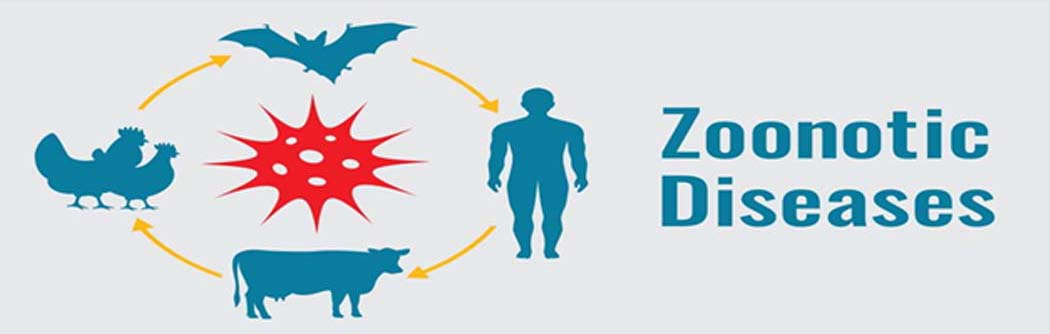
Zoonotic diseases infections transmitted between animals and humans represent one of the most significant challenges to global public health. Caused by bacteria, viruses, parasites, and fungi, these diseases spread through animal contact, contaminated food or water, and insect vectors. Notable examples include rabies, bird flu, swine flu, brucellosis, tuberculosis, and COVID-19. Effective surveillance is the frontline defense against their spread.
Zoonotic diseases infections transmitted between animals and humans represent one of the most significant challenges to global public health. Caused by bacteria, viruses, parasites, and fungi, these diseases spread through animal contact, contaminated food or water, and insect vectors. Notable examples include rabies, bird flu, swine flu, brucellosis, tuberculosis, and COVID-19. Effective surveillance is the frontline defense against their spread.
1. Understanding zoonotic diseases
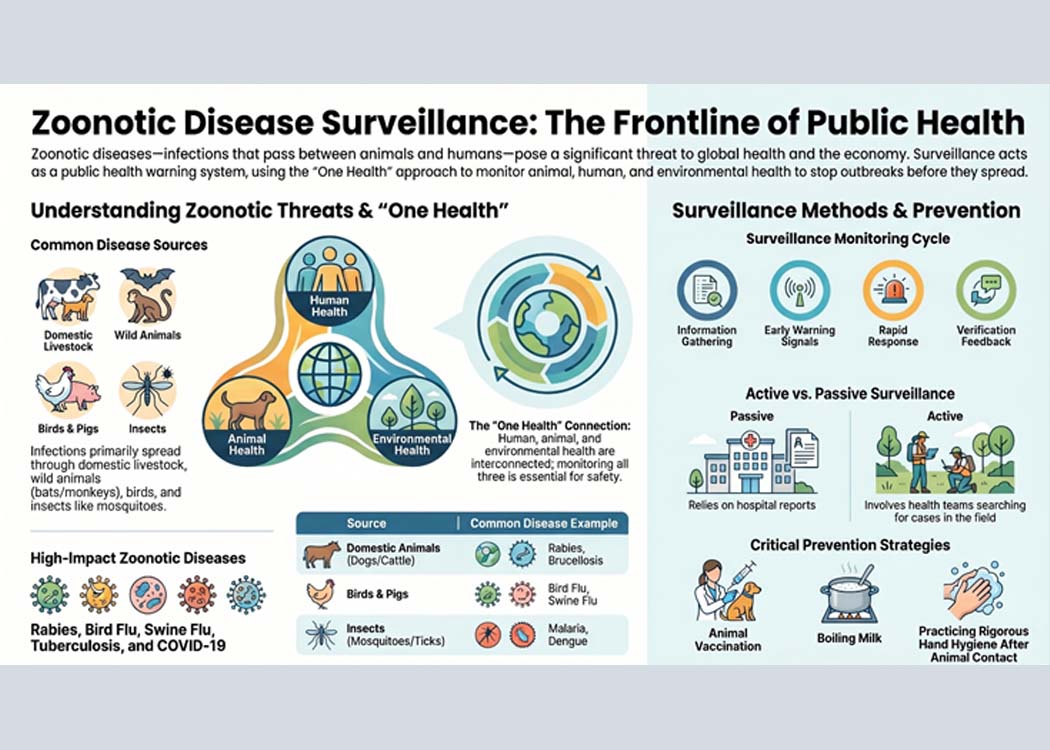
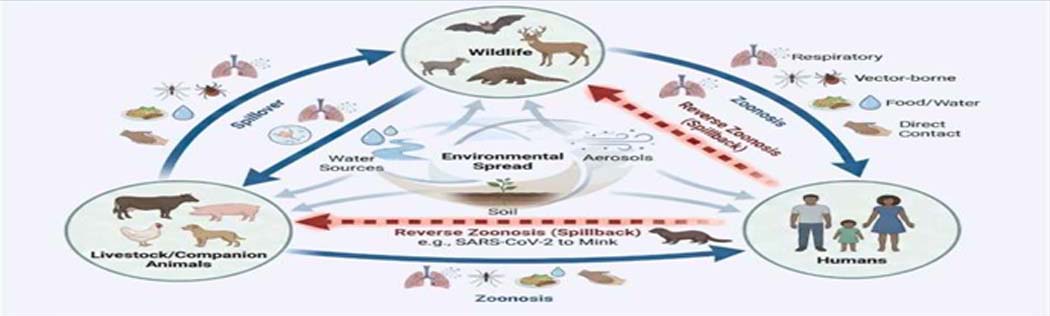
Zoonotic diseases originate from domestic animals (dogs, cats, cattle), wildlife (bats, monkeys, rodents), birds, and insects (mosquitoes, ticks). Transmission routes include bites or scratches, consumption of raw milk or undercooked meat, contact with animal waste, contaminated water, and arthropod bites. While some infections are mild and self-limiting, others cause severe morbidity and mortality.
Key zoonotic diseases at a glance
| Disease | Disease |
| Rabies | Swine Flu (H1N1) |
| Bird Flu (H5N1) | Tuberculosis (bovine) |
| Brucellosis | Dengue / Malaria |
| COVID-19 | Leptospirosis |
2. Disease surveillance: Purpose & methods
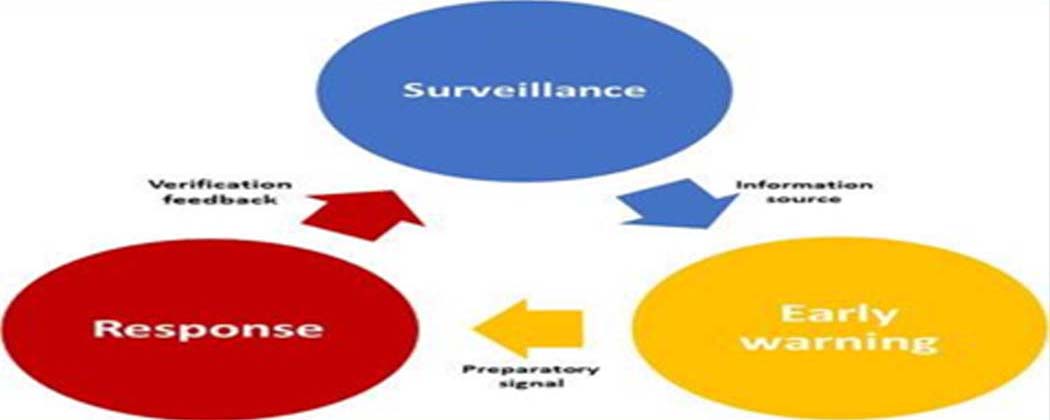
Disease surveillance is a systematic process of collecting, analyzing, and acting on health data to detect and control outbreaks. For zoonotic diseases, it requires integrated monitoring of both animal and human populations, supported by laboratory testing and inter-departmental coordination.
Surveillance methods
| Method | Method |
| Passive Surveillance | Laboratory Surveillance |
| Active Surveillance | Community-Based Surveillance |
| Sentinel Surveillance | Environmental Monitoring |
Passive surveillance relies on routine reporting from clinics and hospitals. Active surveillance deploys field teams to proactively identify cases. Sentinel surveillance monitors selected high-risk sites continuously, while community-based approaches harness local knowledge — especially valuable in rural areas where formal systems are weak.
3. The one health approach
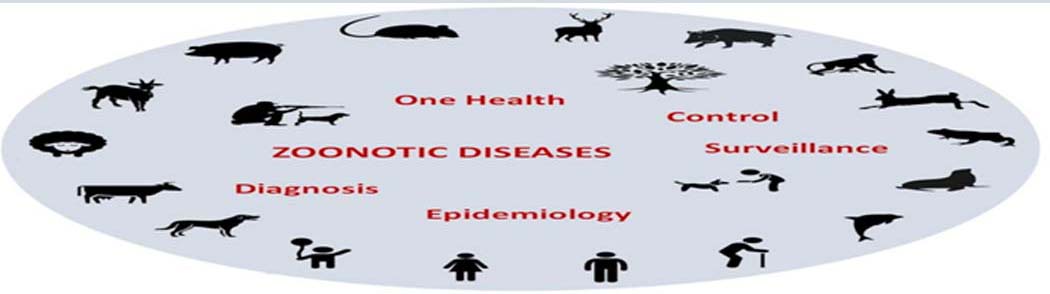
“One Health” is the guiding framework for modern zoonotic disease surveillance. It recognizes that human health, animal health, and environmental health are deeply interconnected and cannot be managed in isolation. Under this model, physicians, veterinarians, environmental scientists, and policymakers collaborate within shared surveillance and response systems.
For example, contaminated water sources may trigger illness in livestock that subsequently exposes farm workers, illustrating the chain linking environment → animal → human health. Addressing the environmental root simultaneously protects all three domains. The One Health approach accelerates outbreak detection and enables more efficient resource deployment.
4. Challenges & prevention
Major challenges
- Limited public awareness about animal-to-human transmission routes
- Delayed or incomplete disease reporting in resource-limited settings
- Inadequate laboratory infrastructure in rural and peri-urban areas
- Poor coordination between human health and veterinary departments
- Poverty restricting access to vaccines and timely treatment
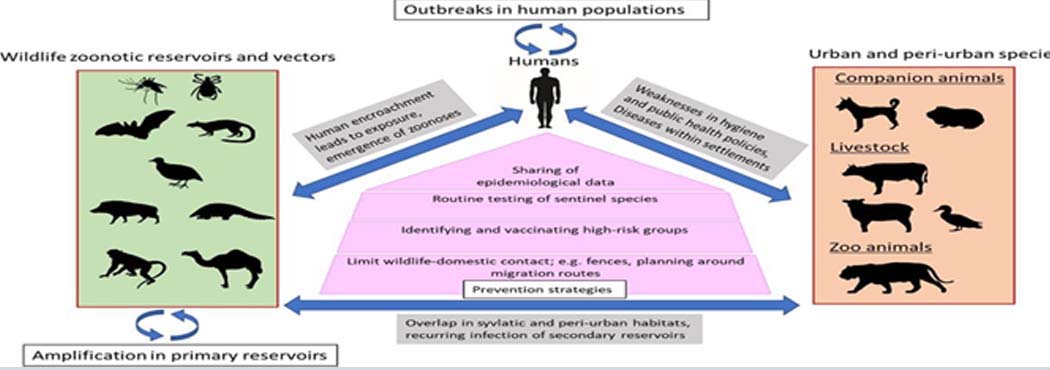
- Climate change expanding the geographic range of vector-borne diseases
Key Prevention Strategies
- Routine vaccination of domestic and farm animals (e.g., rabies vaccine for dogs)
- Safe food practices: boiling milk, thorough cooking of meat, proper washing of produce
- Personal hygiene: handwashing after animal contact, clean living environments
- Mosquito and vector control: removing standing water, using nets and repellents
- Public education campaigns on zoonotic disease risks and prevention
- Regular government inspection of farms, slaughterhouses, and live animal markets
5. Zoonotic surveillance in Pakistan
Pakistan faces a high burden of zoonotic diseases, driven by close human–animal cohabitation, large livestock populations, and gaps in health infrastructure. Prevalent diseases include rabies, dengue, bird flu, brucellosis, and bovine tuberculosis. The Health Department, Livestock Department, veterinary services, and hospitals jointly manage surveillance; however, significant improvements are needed in reporting systems, laboratory capacity, and rural outreach.
Conclusion
Zoonotic disease surveillance is indispensable for safeguarding public health, animal welfare, and national economic stability. Through the One Health framework — integrating human, animal, and environmental health sectors — early detection and coordinated response become achievable goals. Strengthening surveillance infrastructure, promoting intersectoral collaboration, and investing in public education are the cornerstones of an effective defense against zoonotic threats.
References
World Health Organization (WHO) — Zoonoses Resources | Centers for Disease Control and Prevention (CDC) — One Health | Veterinary Public Health Notes | One Health Organization Resources