


Umer Farooq1* Dr. Abdul Tawaab1, Asmat Usama, Muhammad Aakash2, Abdul Rehman2 and Muhammad Ahmad Nadeem2
1*Department Animal Nutrition, University of Agriculture Faisalabad Constituent college Toba Tek, Pakistan
1Department Microbiology, University of Agriculture Faisalabad Constituent college Toba Tek, Pakistan
1Department Chemistry, Government College University Faisalabad
2Department Poultry Science, University of Agriculture Faisalabad Constituent college Toba Tek, Pakistan
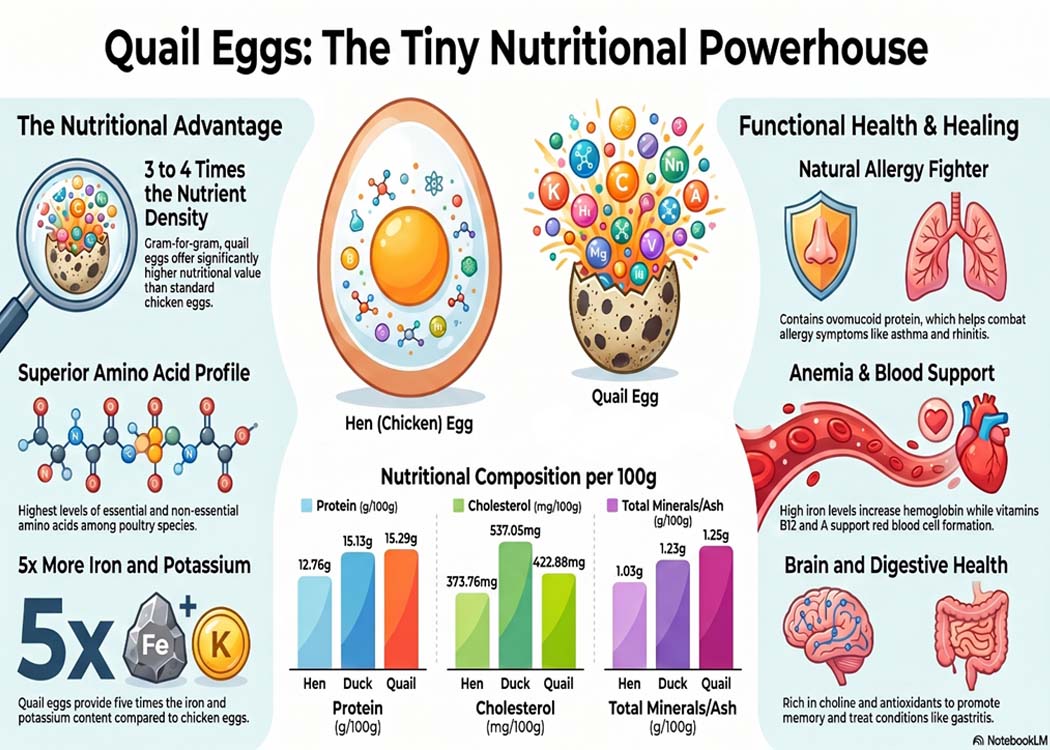
Quail eggs are a nutrient-dense food offering a rich profile of proteins, vitamins, minerals, beneficial fats, and antioxidants. Despite their smaller size compared to chicken eggs, they contain higher concentrations of several essential nutrients, making them a potent dietary supplement. This article reviews their nutritional composition, role in human nutrition, health implications, and dietary integration, highlighting their potential as a functional food to support immune function, metabolic health, and anemia management.
Introduction
Quail eggs have gained attention as a valuable component of human nutrition due to their dense nutrient content and associated health benefits. Smaller than chicken eggs, quail eggs provide higher concentrations of key nutrients, including high-quality proteins, vitamins (A, B-complex, D), minerals (iron, phosphorus, zinc, selenium), and beneficial unsaturated fats. Their antioxidant properties further contribute to reducing oxidative stress, which may lower the risk of chronic diseases. This paper aims to present a comprehensive overview of the nutritional benefits of quail eggs and their potential roles in dietary supplementation and health promotion.
Results
Analysis of quail eggs reveals a rich supply of essential nutrients:
Proteins essential for tissue repair and growth
Vitamins supporting vision, immune function, neurological health, and bone integrity
Minerals facilitating oxygen transport, bone health, immune response, and antioxidant defense
Beneficial lipids promoting cardiovascular health
Antioxidants reducing oxidative stress These nutrients contribute to quail eggs’ efficacy as a nutritional supplement, especially for populations with nutrient deficiencies. Quail eggs are better tolerated by some individuals allergic to chicken eggs and are easily digestible, making them suitable for children, elderly, and sensitive individuals. Preliminary evidence indicates potential benefits in regulating blood sugar and cholesterol, anti-inflammatory effects, and support for iron-deficiency anemia.
Discussion
The dense nutrient profile of quail eggs positions them as an efficient alternative protein and micronutrient source. Their vitamin and mineral content support immune system strengthening and metabolic regulation, while bioactive compounds may exert anti-inflammatory effects. The iron content is particularly relevant for anemia prevention and management. However, due to their small size, consuming multiple quail eggs may be necessary to achieve meaningful nutrient intake. Incorporating quail eggs into a balanced diet can enhance overall nutritional status, especially in vulnerable populations. Further research is warranted to substantiate emerging health claims and optimize dietary recommendations.
Conclusion
However, due to their small size, consuming multiple quail eggs may be necessary to achieve meaningful nutrient intake that meets daily dietary requirements. This characteristic highlights the importance of incorporating quail eggs thoughtfully within a varied and balanced diet to maximize their nutritional benefits. When included alongside other nutrient-rich foods, quail eggs can significantly contribute to improving overall nutritional status, particularly in vulnerable populations such as children, the elderly, and individuals with specific nutrient deficiencies or dietary restrictions.
Their dense nutrient profile offers a practical means to address micronutrient gaps, especially in regions where malnutrition or anemia is prevalent. The bioavailability of key nutrients such as iron and vitamins in quail eggs supports their role in preventing and managing nutritional anemia and bolstering immune function. Moreover, the presence of unsaturated fatty acids and antioxidants may provide protective effects against chronic diseases linked to oxidative stress and inflammation, thereby enhancing long-term health outcomes.
Despite these promising attributes, further rigorous clinical research is warranted to substantiate the emerging health claims associated with quail egg consumption. Well-designed studies should focus on quantifying their impact on metabolic parameters, immune modulation, and inflammatory markers to inform evidence-based dietary guidelines. Additionally, research into optimal consumption quantities, preparation methods, and potential allergenicity will help optimize recommendations for diverse populations.
In conclusion, quail eggs represent a nutrient-rich functional food with diverse health benefits, including immune support, metabolic regulation, and anemia prevention. Their incorporation into dietary planning can provide a valuable supplement to address nutrient deficiencies and support overall health. Integrating quail eggs as part of a holistic nutritional strategy offers potential advantages for enhancing diet quality and mitigating nutrient insufficiencies. Future studies should prioritize clinical validation of their health effects and develop clear guidelines for effective dietary integration to maximize their contribution to public health nutrition.
Quail eggs represent a nutrient-rich functional food with diverse health benefits, including immune support, metabolic regulation, and anemia prevention. Their incorporation into dietary planning can provide a valuable supplement to address nutrient deficiencies and support overall health. Future studies should focus on clinical validation of their health effects and guidelines for effective dietary integration.
Quail eggs are a valuable component in human nutrition due to their rich nutrient profile and potential health benefits. They are smaller than chicken eggs but contain a higher concentration of certain nutrients, making them a nutrient-dense food source.
Nutritional Composition:
- Proteins: Quail eggs are rich in high-quality proteins essential for tissue repair, enzyme production, and overall growth.
- Vitamins: They provide significant amounts of vitamins such as vitamin A (important for vision and immune function), B-complex vitamins including B12 (crucial for red blood cell formation and neurological health), and vitamin D (important for bone health).
- Minerals: Quail eggs contain essential minerals like iron (supports oxygen transport), phosphorus (important for bone and teeth health), zinc (immune function), and selenium (antioxidant properties).
- Fats: They have beneficial lipids, including unsaturated fatty acids, which support cardiovascular health.
- Antioxidants: They contain antioxidants that help reduce oxidative stress and may protect against chronic diseases.
Importance in Human Nutrition:
- Rich nutrient source: Due to their dense nutrient content, quail eggs can be an efficient dietary supplement, especially in populations with nutrient deficiencies.
- Allergy considerations: They are sometimes better tolerated by individuals allergic to chicken eggs, offering an alternative protein source.
- Digestibility: Quail eggs are easily digestible, making them suitable for children, elderly, and individuals with sensitive digestion.
Potential Effects on Health:
- Immune support: The vitamins and minerals in quail eggs contribute to strengthening the immune system.
- Metabolic benefits: Some studies suggest quail eggs may help regulate blood sugar and cholesterol levels, potentially benefiting metabolic health.
- Anti-inflammatory properties: Bioactive compounds in quail eggs may exert anti-inflammatory effects.
- Support for anemia: The iron content can aid in preventing or managing iron-deficiency anemia.
Incorporating quail eggs into the diet can enhance nutritional intake, but they should be consumed as part of a balanced diet. Their small size means multiple eggs may be needed to meet significant nutrient requirements.