

Haroon Akhtar Khan calls for a comprehensive export strategy, reliable access to feed ingredients, stronger biosecurity and international quality standards as industry leaders focus on investment, technology and affordable protein
LAHORE: Adviser to the Prime Minister for Industries and Production Haroon Akhtar Khan has called for a comprehensive export strategy to help Pakistan’s poultry industry enter international markets, stressing that stronger quality controls, reliable access to raw materials and investment in modern technology are essential to turn the sector into a driver of economic growth.
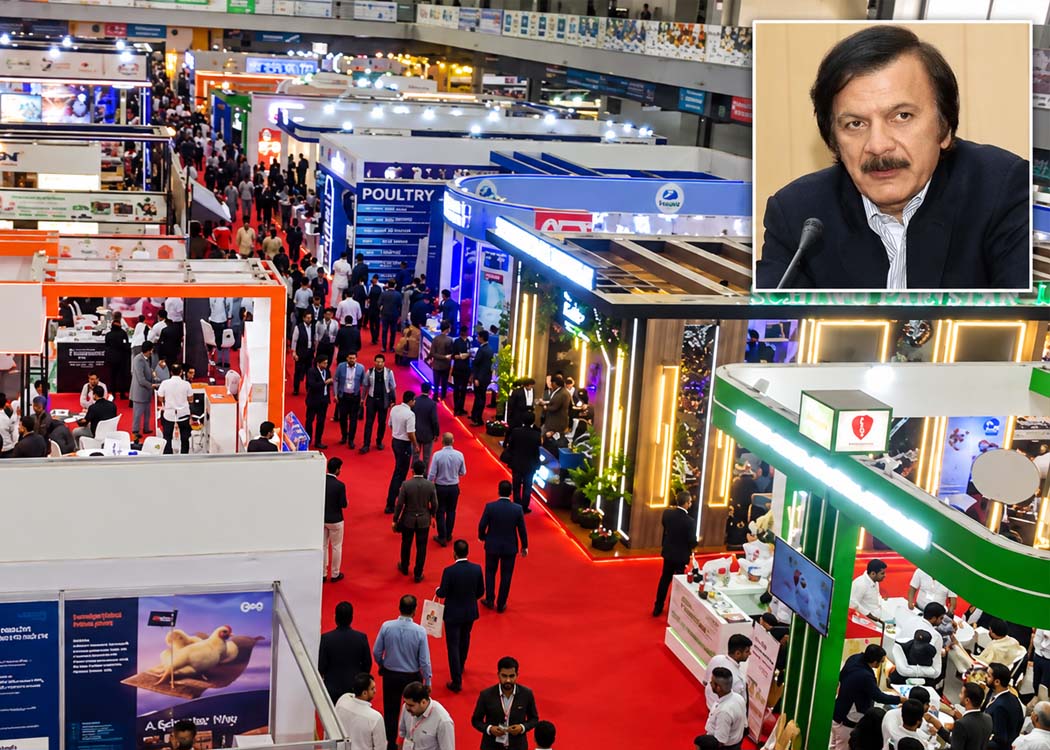
Addressing the 26th International Poultry Expo (IPEX 2026) at the Expo Centre Lahore on Thursday, he said the industry had the capacity to contribute more significantly to food security, employment and industrial development but needed to move beyond meeting domestic demand and compete in global markets.
Organised by the Pakistan Poultry Association (PPA), the three-day exhibition is being held from October 8 to 10, bringing together local and international businesses involved in poultry production, feed and nutrition, animal health, medicines and vaccines, breeding, farm equipment, processing and automation. The event also provides a platform for technical knowledge exchange, business networking and partnerships aimed at modernising poultry production.
Haroon Akhtar Khan said Pakistan needed a poultry industry that could produce more efficiently, supply affordable nutrition to consumers and meet internationally recognised quality and safety standards. Despite high production costs, disease-related challenges, energy pressures and uncertainty, he said, the sector had continued to invest and sustain production, demonstrating its resilience and importance to the national economy.
He stressed that a clear and predictable policy framework was necessary to support investment and help businesses plan for long-term growth. The government, under Prime Minister Muhammad Shehbaz Sharif, was working to translate policy commitments into practical outcomes, he said, adding that investment, industrial expansion and employment creation were key indicators of progress.
The adviser identified the uninterrupted availability of poultry feed and other essential raw materials as a major priority. Decisions concerning imports of soybean and other critical inputs, he said, should be based on clearly defined requirements and made within established timelines to reduce uncertainty for producers.
Access to affordable feed remains an important concern for the poultry industry because feed is a major component of production costs. Greater predictability in the supply of essential ingredients could help businesses manage costs and support more stable production.
Haroon Akhtar Khan said Pakistan should pursue export opportunities for processed, packaged and branded halal poultry products rather than rely exclusively on domestic sales. He called for an export framework that combined halal certification with disease surveillance, internationally recognised processing standards and comprehensive traceability systems.
Biosecurity, he added, was essential not only to protect poultry farms from disease but also to preserve access to overseas markets. An effective cold chain was equally important to maintain product quality during storage and transportation and to protect the reputation of Pakistani poultry brands.
“Pakistani poultry products should be of a standard that encourages international buyers to choose them repeatedly on the basis of quality and competitive value,” he said.
The adviser also highlighted the role of technology in improving productivity and strengthening competitiveness. Precision feeding, advanced genetics, early disease detection and digital monitoring could help producers improve efficiency, manage disease risks and adopt more modern production practices.
He urged international partners to support technology transfer, workforce training and the development of local supply chains. He also called for greater opportunities for young people in biotechnology, engineering, food science, entrepreneurship and other fields connected with the poultry sector.
Emphasising cooperation between the government and industry, Haroon Akhtar Khan said industrial challenges required clear priorities, defined responsibilities and effective follow-up to ensure that decisions translated into action.
“The government’s objective is to create a business environment where entrepreneurs can plan for the next decade rather than remain focused on the next crisis,” he said.
He added that partnerships formed at IPEX 2026 should lead to sustainable investment, stronger business relationships and long-term opportunities for young Pakistanis in productive industries.
Punjab Minister for Industries and Commerce Chaudhry Shafay Hussain also highlighted the expo’s role in strengthening business connections and promoting awareness of the poultry sector. He said 26 international companies, alongside local businesses associated with the industry, had established stalls at the event and congratulated the organisers on its successful staging.
Speaking to the media, he described poultry as a major source of protein and said the provincial government was taking measures to reduce feed prices and promote soybean cultivation. A reduction in feed costs, he said, would ultimately help bring down poultry meat prices.
Chaudhry Shafay Hussain said the government intended to seek technical assistance from the United States, Canada and Argentina, countries with expertise in soybean cultivation. Research on the crop was also under way at the University of Agriculture Faisalabad, he added.
He said Punjab was working with China to promote modern agriculture and that the provincial government wanted advanced agricultural machinery to be manufactured locally.
The discussions at IPEX 2026 placed the poultry sector’s interconnected challenges — from feed availability and production costs to disease management, technology adoption and market access — at the centre of the industry’s growth agenda. For Pakistan to translate its poultry production capacity into a stronger export presence, the priorities outlined at the expo will need to be matched by consistent policies, internationally competitive processing and food-safety systems, reliable supply chains and sustained collaboration between public institutions and private businesses.