

At IPEX Lahore, Finance Minister Muhammad Aurangzeb called for modern technology, stronger disease control and better cold-chain infrastructure as conflicting reports left the industry’s actual export earnings unclear.
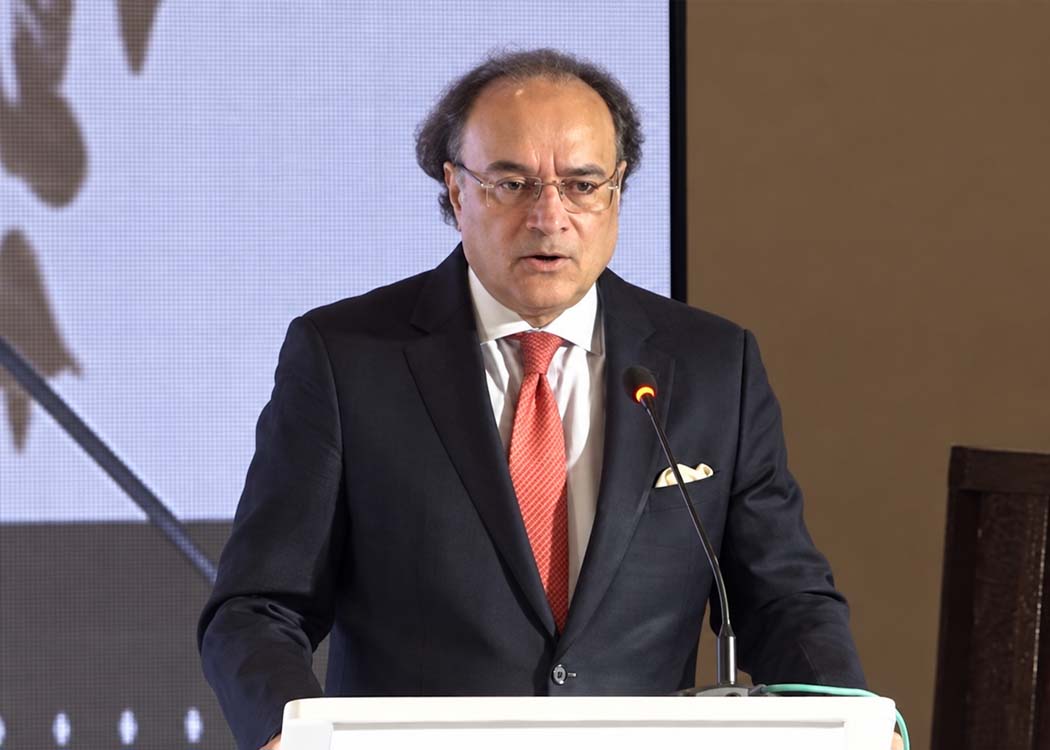
LAHORE: Pakistan has emerged as one of the world’s largest poultry producers, but its presence in international markets remains disproportionately small, Finance Minister Senator Muhammad Aurangzeb told industry leaders at the International Poultry Expo 2026.
Addressing the 26th International Poultry Exhibition as chief guest at the Expo Centre Lahore, Aurangzeb said Pakistan ranked 11th globally in poultry production and should now aim to enter the top 10 before working towards a place among the five leading producers.
The minister’s remarks placed the spotlight on a sector that supports approximately 1.5 million families, generates rural employment and contributes significantly to Pakistan’s agricultural economy, food security and supply of relatively affordable animal protein.
Reports of the speech said the industry produces approximately 2.5 billion kilogrammes of poultry meat annually. They also cited annual egg production of more than 28 million, although that figure appears to contain a unit error.
The Pakistan Economic Survey 2025–26 reported poultry meat production of about 2.83 million tonnes—equivalent to 2.83 billion kilogrammes—and annual production of more than 28 billion eggs, not 28 million. The distinction is material when assessing the industry’s scale and export potential.
Despite this substantial production base, Aurangzeb said poultry exports had yet to reflect the sector’s capacity.
However, reports of the minister’s export figures were inconsistent. An October 10 report by Business Recorder said poultry exports accounted for approximately $23 million to $24 million out of Pakistan’s total meat exports of around $530 million.
Subsequent reports by Profit by Pakistan Today and the October 11 print edition of Business Recorder said Pakistan’s poultry exports remained below $4 million.
The reports did not explain whether the figures referred to different product categories, reporting periods or definitions of poultry exports. An official product-wise export breakdown would therefore be required before either figure could be treated as definitive.
The broader message of Aurangzeb’s address was nevertheless clear: Pakistan’s high production ranking has not yet translated into a meaningful position in the global poultry trade.
The finance minister identified Gulf Cooperation Council countries as promising destinations for Pakistani poultry products. He also pointed to emerging opportunities in Central Asian markets, including Kazakhstan, Tajikistan and Uzbekistan, as well as Southeast Asia.
Accessing those markets, he said, would require more than an increase in production. Pakistan must improve disease prevention and management, lower feed and other input costs, strengthen processing capacity and develop reliable cold-chain and logistics systems capable of maintaining product quality from farm to export destination.
These areas are especially important in poultry trade, where animal-health status, biosecurity, traceability, processing standards, temperature control and certification can determine whether products qualify for entry into overseas markets.
Aurangzeb called for greater investment and wider adoption of modern technology to increase productivity, improve competitiveness and strengthen the industry’s capacity to meet international requirements.
He also emphasised the private sector’s role, saying that a conducive business environment was necessary to attract investment into poultry production and its allied industries.
The minister said the government was prepared to engage with industry representatives over taxation concerns ahead of the next federal budget. However, he stressed that taxation represented only one part of the challenge facing the sector.
Aurangzeb also addressed sales-tax compliance, saying businesses collecting sales tax from consumers were obligated to deposit it with the national exchequer. He referred to the government’s efforts to curb evasion, beginning with measures in the sugar industry, and said revenue recovered through stronger enforcement could support productive sectors with growth potential, including poultry.
The International Poultry Expo featured more than 200 stalls and attracted extensive participation from businesses and other industry stakeholders, according to the reports.
Aurangzeb said exhibitions of this scale could help connect investors, producers, technology providers and other participants across the poultry value chain. Such engagement, he said, could build investor confidence and support the industry’s longer-term development.
The sector’s expansion carries importance beyond exports. Chicken meat and eggs remain central to Pakistan’s food supply, while poultry farming, feed manufacturing, hatcheries, processing, transportation, veterinary services and retail activity support livelihoods across rural and urban economies.
The policy challenge is now to convert that domestic scale into internationally competitive production.
Doing so will require coordinated work on feed availability, animal health, biosecurity, processing, certification, traceability, cold storage, logistics and market access. It will also require credible and consistently reported industry data—particularly when policymakers and businesses are assessing the difference between Pakistan’s production strength and its limited export footprint.