

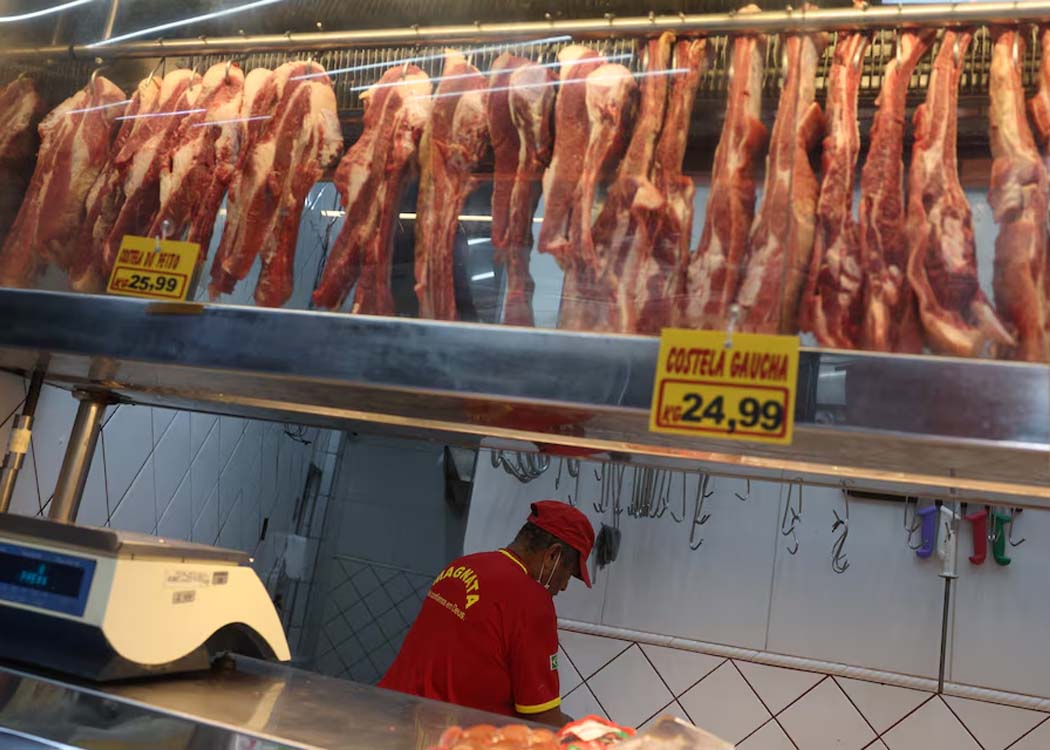
Brazilian meat shipments to the European Union will be suspended from September 3 after the bloc said it had not received guarantees that Brazil complies with rules restricting antimicrobial use in animals.
PARIS: The European Union is set to suspend meat imports from Brazil from September 3, putting one of the world’s biggest meat-exporting industries under fresh scrutiny over the use of antimicrobial substances in livestock.
The European Commission said Brazil had failed to provide guarantees that its production practices comply with EU rules prohibiting the use of antimicrobials to promote animal growth.
The decision affects Brazilian meat entering the EU and comes after the bloc had already warned in May that Brazil would be removed from a list of countries considered compliant with EU requirements for certain animal products.
The move highlights a growing international concern over how antimicrobial use in food-producing animals can affect human health — particularly through the spread of drug-resistant bacteria.
Why is the EU stopping Brazilian meat?
At the centre of the dispute is the EU’s requirement that antimicrobials must not be used to promote animal growth.
The European Commission spokesperson said the bloc had not received sufficient guarantees from Brazil that its rules were being followed.
The EU also prohibits the use in animals of antimicrobials that are considered important for treating human infections, including certain antibiotics.
For the European Union, the restrictions are part of a broader effort to limit practices that could contribute to antimicrobial resistance.
Why does antimicrobial use in animals matter to human health?
Antimicrobials, including antibiotics, are used in animal health to treat and prevent infections.
But excessive or inappropriate use can contribute to the development of antimicrobial-resistant bacteria.
Those bacteria can spread between animals and people through food, direct contact or the environment.
The consequence can be serious: infections that were once readily treatable may become more difficult to control when the bacteria causing them are resistant to commonly used medicines.
That makes antimicrobial use in food-producing animals not only an agricultural issue, but also a public-health concern.
What happens to Brazilian beef, poultry and honey?
The EU’s scrutiny extends across several Brazilian animal-product sectors, although the status of individual products differs.
For beef, Brazil was the EU’s second-largest supplier in 2025.
The Commission said it was seeking guarantees covering the entire life cycle of cattle, rather than assurances limited to a particular stage of production.
For poultry and honey, an EU audit of Brazilian production is expected to be completed at the end of this week.
However, the results will not be immediately available, leaving uncertainty over when those products could regain unrestricted access to the European market.
How long will the suspension last?
The European Commission has not provided a timeline for lifting the suspension.
That means Brazilian exporters face uncertainty over how long shipments could remain affected and what additional assurances may be required before normal trade can resume.
The dispute also puts pressure on Brazil to demonstrate that its production and monitoring systems can meet the EU’s antimicrobial requirements.
A wider warning about antibiotic resistance
The dispute comes against the backdrop of a growing global challenge: antimicrobial resistance.
When bacteria become resistant to medicines used to treat infections, standard treatments can become less effective or fail altogether.
The problem can be accelerated when antimicrobials are used unnecessarily or inappropriately in humans or animals.
For food-importing countries, this has made antimicrobial controls an increasingly important part of food and animal-health regulation.
The EU’s action against Brazilian meat therefore goes beyond a commercial disagreement.
It reflects the bloc’s insistence that imported animal products meet its standards for antimicrobial use — and its broader concern that practices on farms can ultimately have consequences for human health.
What happens next?
The immediate focus will be on whether Brazil can provide the guarantees the EU is seeking and whether upcoming audits of Brazilian production satisfy European requirements.
For beef, the EU is seeking assurances that cover animals throughout their entire life cycle.
For poultry and honey, the findings of the ongoing audit could determine the next stage of the bloc’s decision-making.
Until then, Brazilian exporters face a new barrier to one of the world’s major markets, while the EU maintains its position that controlling antimicrobial use is essential to protecting both food safety and public health.