

Advanced biocontainment studies on influenza transmission aim to protect humans and animals alike, with new vaccines and prevention strategies for birds, poultry, and livestock diseases
COLUMBIA: In the global fight against influenza, scientists are shifting focus to a critical reality often overlooked—many of the world’s most dangerous flu viruses originate in animals, livestock, and poultry before reaching humans.
A major expansion of a next-generation influenza research facility in the United States is now accelerating efforts to understand exactly how these viruses spread between birds, livestock, and people—and how to stop them before they trigger the next pandemic.
This is not just about seasonal flu anymore. It is about breaking the chain of transmission at its source.
Why animals, livestock and poultry are central to the fight
Influenza viruses are constantly evolving, particularly in animal populations. Birds and poultry serve as natural reservoirs for avian influenza, while livestock—especially pigs—can act as mixing vessels where multiple virus strains combine and mutate.
These cross-species transmissions are how some of the most dangerous outbreaks begin.
From bird flu disrupting poultry industries to swine flu affecting livestock and humans, the economic and public health stakes are enormous. This makes animal-focused research not just relevant—but essential.
Simulating real-world spread to stop outbreaks early
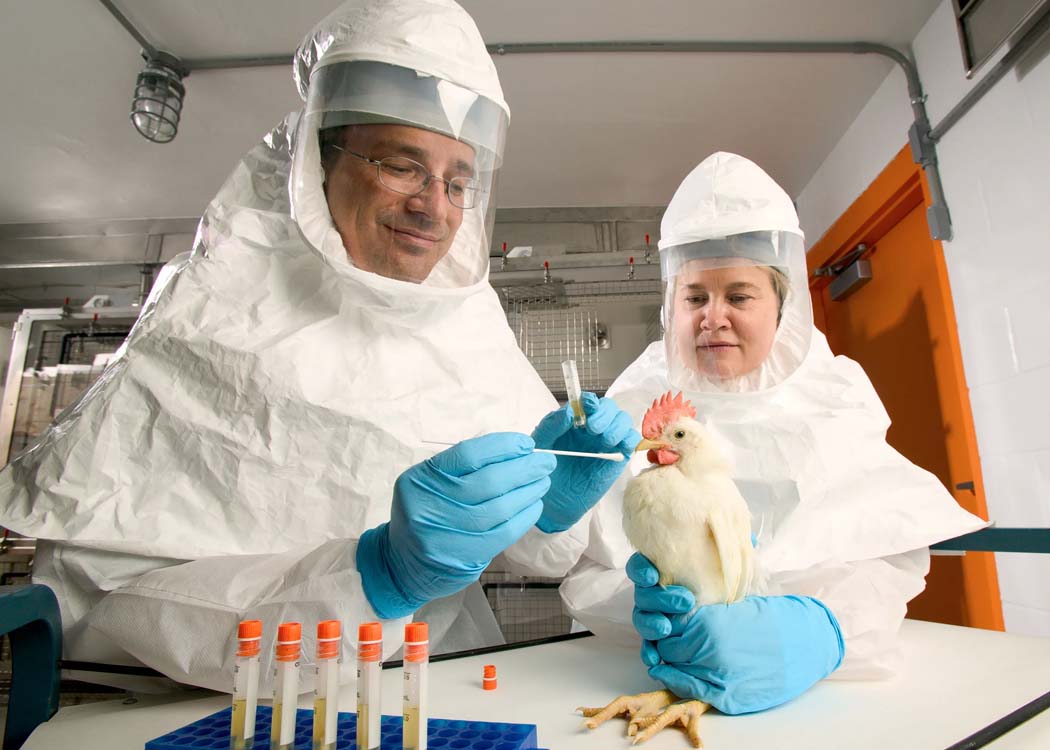
The upgraded research facility now includes over 17,000 square feet of advanced biocontainment space, allowing scientists to safely study influenza under highly controlled conditions.
What sets this work apart is the ability to recreate real-world environments—adjusting temperature and humidity to observe how the virus behaves in farms, poultry houses, homes, and hospitals.
This could lead to practical interventions, such as:
- Smarter ventilation systems in poultry farms and livestock facilities
- Seasonal control strategies based on environmental risk
- Better outbreak prediction models
Understanding how flu spreads in animals is key to stopping it before it reaches humans.
New vaccines for both humans and animals
Researchers are not just tracking the virus—they are actively developing next-generation vaccines designed to protect across species.
Current efforts include:
- Vaccines targeting highly pathogenic avian influenza in birds and poultry
- Strategies to control swine flu in livestock populations
- Cross-protection approaches to reduce zoonotic spillover into humans
This integrated approach recognizes that human health and animal health are deeply connected.
Cutting-edge science driving breakthroughs
Beyond vaccines, scientists are using advanced technologies to understand how the immune system responds to influenza.
Using tools like single-cell RNA sequencing, researchers are identifying which immune cells respond most effectively to infection—insights that could reshape how vaccines are designed.
There is also growing focus on how the body “remembers” past infections, which could lead to more effective and longer-lasting immunity strategies.
The bigger goal: preventing the next pandemic
Influenza remains one of the most unpredictable infectious diseases, capable of rapid mutation and global spread.
But the strategy is changing.
Instead of reacting to outbreaks, scientists are now working to prevent them—by targeting the virus where it begins: in animals, livestock, and poultry.
This approach aligns with the global “One Health” framework, which recognizes that human, animal, and environmental health are interconnected.
Why this matters now
The urgency is real:
- Poultry industries continue to face repeated avian influenza outbreaks
- Livestock infections threaten food security and economies
- Climate change is altering virus transmission patterns
- Zoonotic spillover risks are increasing globally
By investing in advanced research infrastructure and cross-disciplinary collaboration, scientists are building a frontline defense against future flu threats.
A shift that could redefine global health
The expansion of influenza research capacity signals more than scientific progress—it marks a strategic shift in how the world approaches infectious diseases.
Stopping flu at the animal level could dramatically reduce human outbreaks.
And if successful, this model could be applied to other emerging diseases as well. Because the next pandemic may not start in a hospital—it may begin in a farm, a flock, or a herd.