


Proposed Digital Farmers’ Diary would bring farmer and land data into a unified system as government seeks better agricultural planning, stronger value chains and higher-value exports
ISLAMABAD: Pakistan is moving towards a more digitally integrated agriculture system, with the government proposing to bring farmers and agricultural land records into a unified digital framework as part of efforts to improve farm-sector planning and expand agricultural exports.
The proposal includes the development of a Digital Farmers’ Diary, described as an Agri Stack, under which information on farmers and their agricultural land would be digitised and brought together in a structured database.
The initiative was discussed as part of a broader push to strengthen Pakistan’s agricultural value chains, improve coordination between federal and provincial authorities and create greater access for Pakistani agricultural products in international markets.
Digital records at the centre of agriculture planning
A unified digital record of farmers and agricultural land could provide the government with a more comprehensive picture of the country’s farming base, including information needed for agricultural planning and policy decisions.
The proposed system is intended to move beyond fragmented information by bringing farmer and land-related data into a more integrated digital structure. Such a database could potentially support more targeted agricultural interventions, resource planning and monitoring of the sector.
The move also comes as Pakistan continues to expand the use of technology in agriculture. Earlier government initiatives have included efforts involving digital agriculture, geographic information systems and technology-based support for farmers. Pakistan’s Land Information and Management System, for example, was launched to use GIS-based information and technology to improve agricultural production, land utilisation and access to information on soil, crops, weather and water resources.
Government links digitisation with export ambitions
The digitalisation proposal is being considered alongside a wider government strategy aimed at increasing the value Pakistan derives from agricultural production.
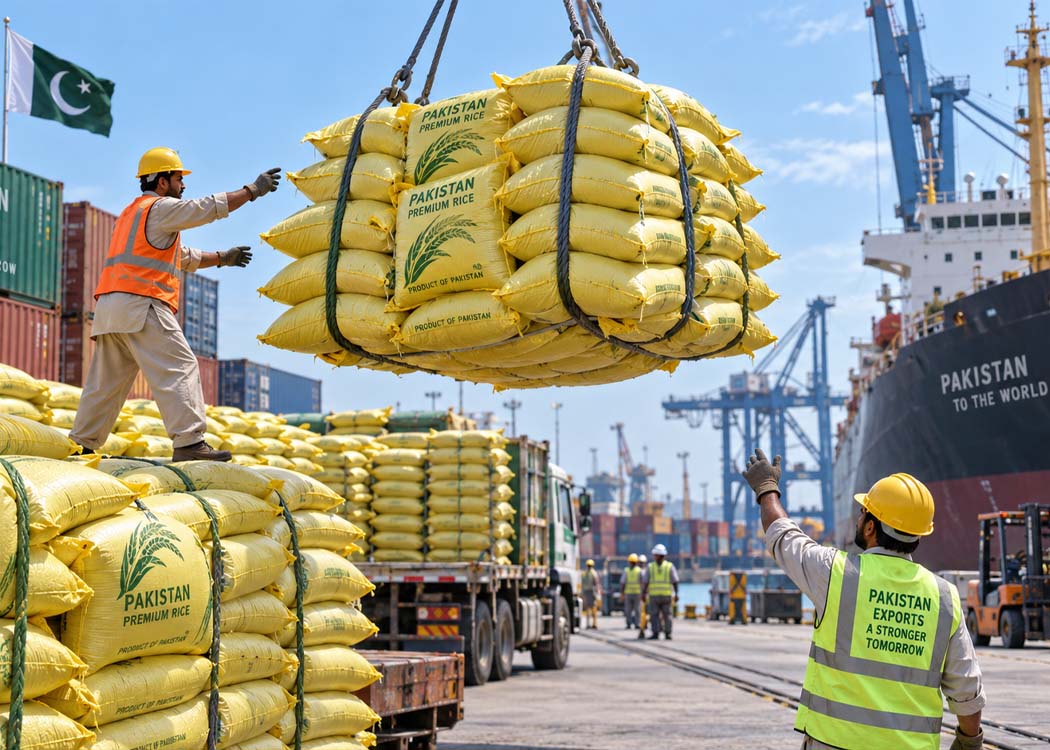
The government has recently emphasised a shift away from exporting largely raw agricultural commodities towards processed, branded and internationally certified products. Federal Planning Minister Ahsan Iqbal said earlier this month that agriculture should be developed into a high-value export engine, with greater attention to processing, certification, traceability and branding.
The government has also identified stronger value chains as an important component of this strategy, connecting production at farm level with processing, packaging and international markets.
The approach reflects an effort to increase export earnings not simply by producing more agricultural commodities, but by improving their quality, processing and marketability before they reach overseas buyers.
Proposed Agri Stack would create a broader data base
The proposed Digital Farmers’ Diary, or Agri Stack, would place farmer and land information within a common digital framework.
Such a system could potentially help authorities better understand where agricultural activity is taking place, what resources are available and how government programmes and agricultural policies are reaching farmers.
It could also provide a foundation for connecting agricultural information with other digital services as the system develops.
However, the effectiveness of such a platform would depend on the accuracy and regular updating of the information entered into it. Digitising outdated or incomplete records without proper verification would limit the usefulness of the database.
Pakistan has already undertaken substantial land-record computerisation in different parts of the country. Research on Pakistan’s earlier land-record digitisation efforts has found that computerised records can affect access to land transactions and agricultural resource allocation, while broader land-governance assessments have linked digitisation with improved transparency, easier access to records and more efficient administration.
Federal-provincial coordination remains important
Agriculture is administered through both federal and provincial institutions, making coordination a key issue for any nationwide digital agriculture system.
The government has proposed activating the National Agriculture and Food Security Council, with provincial chief ministers representing their respective provinces, as part of the broader effort to improve coordination on agricultural policy.
The proposed structure could provide a mechanism for bringing federal and provincial priorities together, particularly on agricultural data, production, food security and export development.
The need for stronger coordination has also featured in recent government discussions on agriculture, including calls for greater harmony between federal and provincial policies and regulations.
Standardised farming practices also under consideration
The government is also considering the development of a Pakistan Good Agriculture Practices (Pak-GAP) framework.
The proposed system would seek to establish more consistent agricultural practices, an area that could become increasingly important as Pakistan attempts to access higher-value international markets where buyers place greater emphasis on quality, traceability, safety and certification.
The emphasis on standards is significant because Pakistan’s agricultural export ambitions extend beyond traditional commodity shipments. Government discussions have identified processed food, horticulture, meat, fish, branded rice and other higher-value segments as areas with potential for export expansion.
Agriculture increasingly viewed through an export lens
The latest digitalisation proposal comes against a broader policy push to make agriculture a stronger contributor to Pakistan’s export earnings.
The Planning Commission said food exports reached $5.02 billion in fiscal year 2025-26, compared with a food import bill of $9.15 billion. It said meat, fish and fruit exports recorded growth during the year, while the government is seeking greater opportunities in processed and value-added agricultural products.
The government has also been pursuing measures to improve trade facilitation more broadly. Prime Minister Shehbaz Sharif recently directed authorities to reduce unnecessary delays and trade barriers, improve logistics and strengthen Pakistan’s integration with regional and global supply chains.
For agriculture, better farm-level data could eventually become one part of that larger effort by helping policymakers identify production patterns, improve planning and build stronger links between farmers, processors and export markets.
The immediate challenge, however, will be turning the proposed digital architecture into a reliable system that is accurate, regularly updated and accessible to the farmers it is intended to serve.