

From methane emissions to carbon credits, a new study reveals how livestock markets could transform into clean energy hubs and revenue engines
LAHORE: What if one of Punjab’s biggest environmental problems could also become one of its most unexpected financial opportunities?
A new feasibility study has brought that possibility into sharp focus — suggesting that the province’s cattle markets, long associated with waste and pollution, could be transformed into a powerful source of clean energy, organic fertiliser, and even international climate finance.
Conducted by the Punjab Cattle Market Management and Development Company, the study outlines a structured pathway to convert livestock waste into valuable economic and environmental assets under a waste-to-energy model.
From waste burden to climate asset
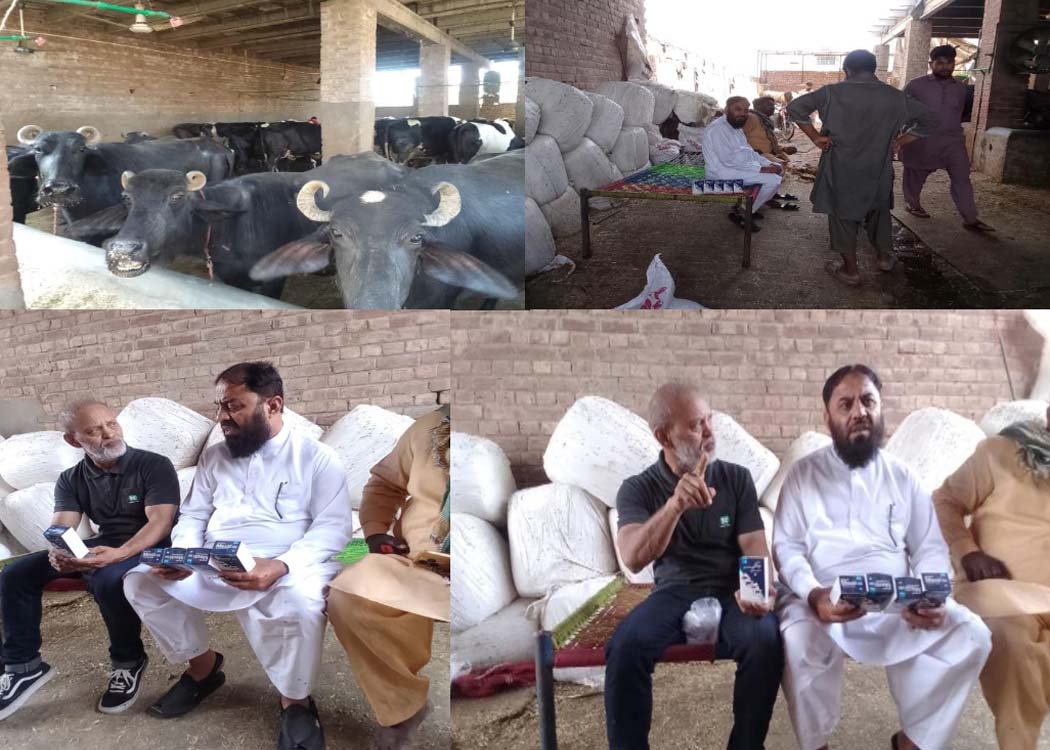
Punjab’s major cattle markets process more than 80,000 animals weekly, generating over 87,000 kilograms of manure every day. Currently, much of this waste is left unmanaged, releasing methane — a greenhouse gas far more potent than carbon dioxide — directly into the atmosphere.
But according to the study, this same waste stream could be captured, processed, and monetised through modern anaerobic digestion systems.
Instead of polluting the air, cattle manure could fuel biogas plants, produce organic fertiliser, and generate carbon credits that can be traded in international markets.
How the model works
The proposed system relies on horizontal plug-flow anaerobic digesters — a technology that processes organic waste in sealed environments to capture methane emissions.
This captured gas can then be converted into:
- Compressed biogas for energy
- Bio-CNG for industrial and transport use
- Clean cooking fuel for local vendors
- Organic fertiliser for agriculture
At the same time, the reduction in methane emissions can be quantified and converted into carbon credits — a key component of global climate finance markets.
High-potential sites identified
Out of eight major cattle markets studied, four — Multan, Chichawatni, Sheikhupura, and Arifwala — were identified as technically and commercially viable for early implementation.
Among them, Multan and Chichawatni emerged as the most promising.
Multan alone could generate over 72,000 carbon credits annually, along with thousands of cubic metres of biogas each month. Chichawatni’s potential is even higher, with projections exceeding 120,000 carbon credits per year.
Over a five-year period, the combined output could approach two million carbon credits — creating a significant opportunity for foreign exchange earnings.
A new revenue stream for the public sector
With global carbon credit prices ranging between $5 and $15 per unit, methane-based projects like this could command strong returns.
Estimates suggest that Punjab’s cattle markets could generate between $1 million and $3 million annually through carbon credits alone — without increasing user fees.
However, officials emphasize that carbon income would be supplementary. The primary financial gains would come from energy production and fertiliser sales, making the model economically sustainable.
Beyond revenue: environmental and social impact
The implications extend far beyond financial returns.
If implemented, the project could:
- Reduce methane emissions and improve air quality
- Address long-standing waste management issues
- Provide cleaner alternatives to LPG and natural gas
- Support agriculture through organic fertiliser production
It also signals a broader shift in how climate finance is being approached — moving beyond traditional sectors like solar and forestry into unconventional but high-impact areas.
What comes next
Following the study, PCMMDC is preparing to move into the next phase, including carbon credit registration, stakeholder consultations, and development of biogas infrastructure at selected sites.
There is also potential alignment with international frameworks such as Article 6.2, which could further enhance the value of these carbon credits in global markets.
The bigger picture
Punjab’s cattle markets may not have been designed as climate solutions — but they could soon become one.
As governments worldwide search for innovative ways to fund sustainability, this model highlights an important shift: climate finance is no longer limited to large-scale projects.
With the right approach, even everyday systems — like livestock markets — can be turned into engines of environmental and economic transformation.